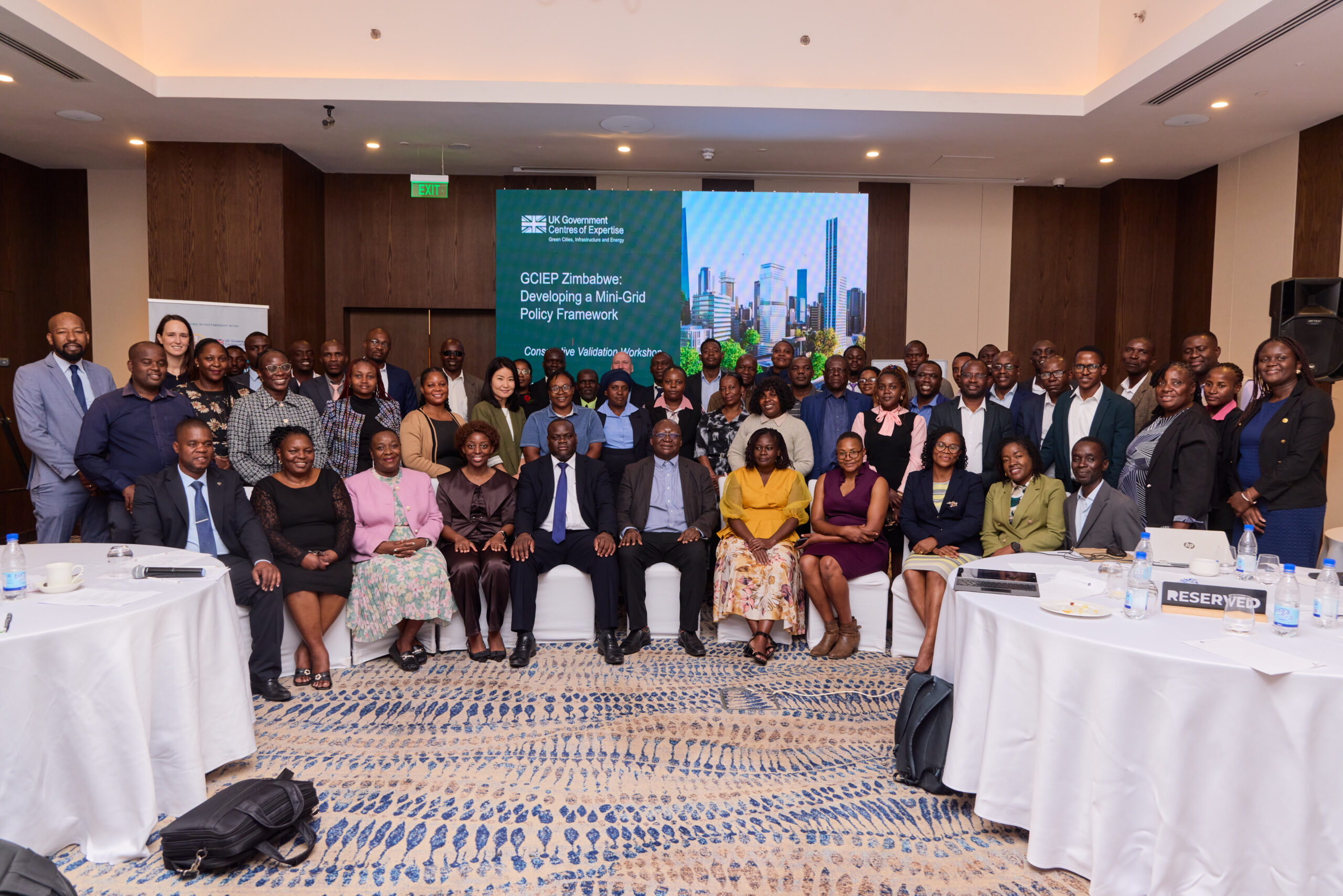

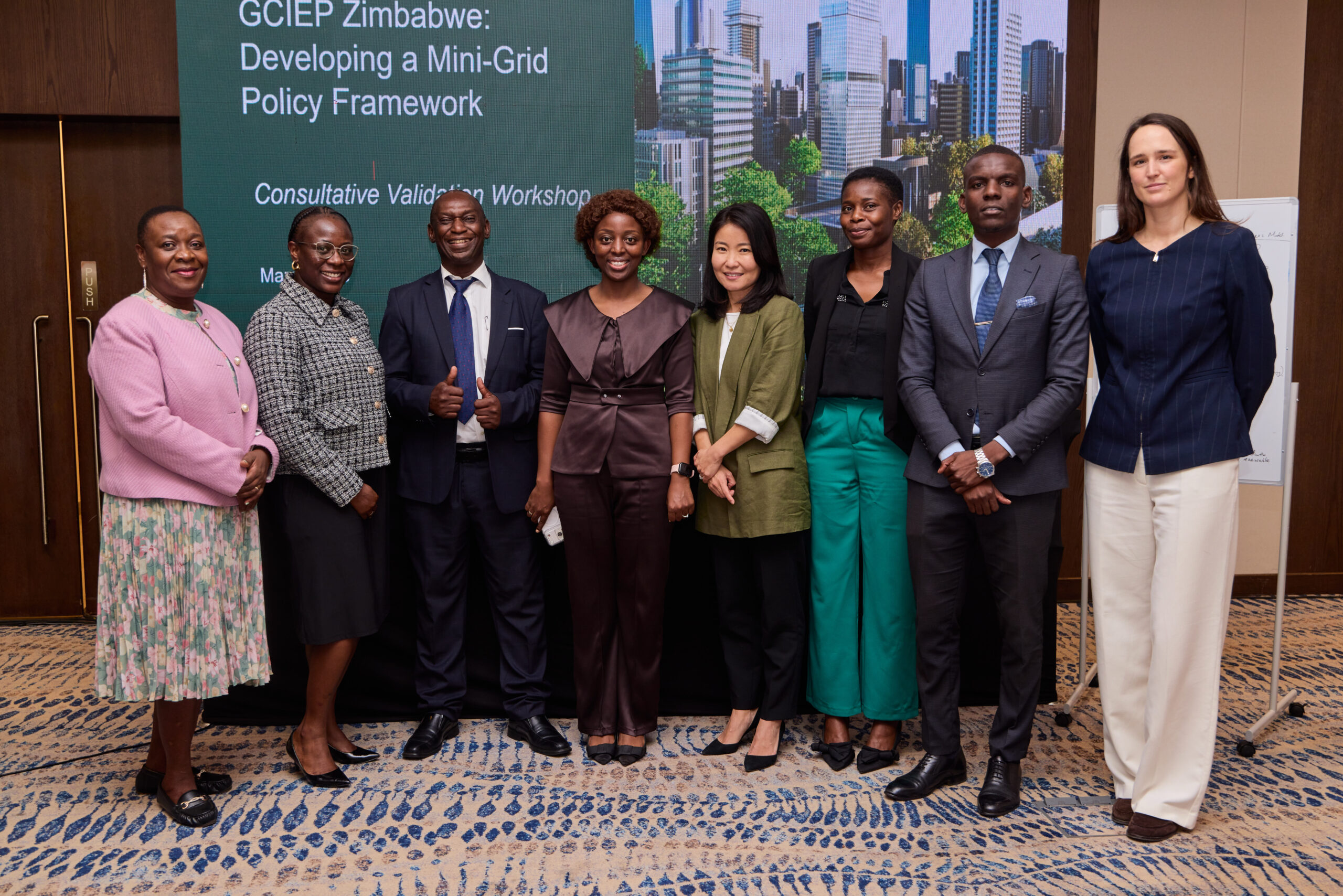
Earlier this month, GET.transform participated in a Validation Workshop for the Mini-Grid Policy Development in Zimbabwe, hosted by the Ministry of Energy and Power Development (MoEPD) in partnership with the Foreign, Commonwealth and Development Office (FCDO) through the Green Cities, Infrastructure and Energy Programme (GCIEP).
The workshop brought together a wide range of national stakeholders, development partners and private sector representatives to review and validate the revised Mini-Grid Policy Framework. Participants included organisations such as UNDP, Distributed Power Africa and the Private Financing Advisory Network (PFAN) and the World Bank, reflecting the breadth of engagement required to advance decentralised energy solutions.
The primary objective was to build consensus on the proposed policy measures, assess the feasibility of implementation arrangements, and identify any necessary adjustments before the framework is finalised by the MoEPD. Discussions covered the policy framework itself, implementation planning, stakeholder engagement, economic and technical regulation, as well as procurement approaches and business models.
A key contribution from GET.transform came from Bhoomika Tiwari, GET.transform Advisor, who presented on the African Model Mini-Grid Regulation Tool, which the African Forum for Utility Regulators (AFUR) had developed in partnership with GET.transform. The IT-based platform has been used by the Zimbabwe Energy Regulatory Authority (ZERA) and many other African energy regulators as part of an effort to standardise and streamline mini-grid regulation across the continent.
Several important insights emerged from the discussions. Participants highlighted the need to prioritise the Green Energy Fund as a critical mechanism for mobilising finance to support mini-grid deployment. The importance of robust stakeholder and community engagement was also emphasised as essential for project sustainability. In addition, the development of a GIS-based digital planning tool was recommended to improve coordination and efficiency in mini-grid planning.
Regulatory progress was also noted, with ZERA having removed licensing fees for energy projects generating less than 10MW, a move expected to encourage further investment in the mini-grid sector.
Next steps include refining the policy based on feedback gathered during the workshop before submission to the MoEPD for final approval. This process will also lay the groundwork for the development of detailed mini-grid regulations, an area in which GET.transform is expected to continue its support.