


Earlier this month, Lesotho advanced its clean transport ambitions as national stakeholders met to review and strengthen the country’s draft Electric Vehicle (EV) Roadmap, developed under technical assistance from GET.transform as part of a broader cooperation with the European Union through the Renewable Lesotho programme.
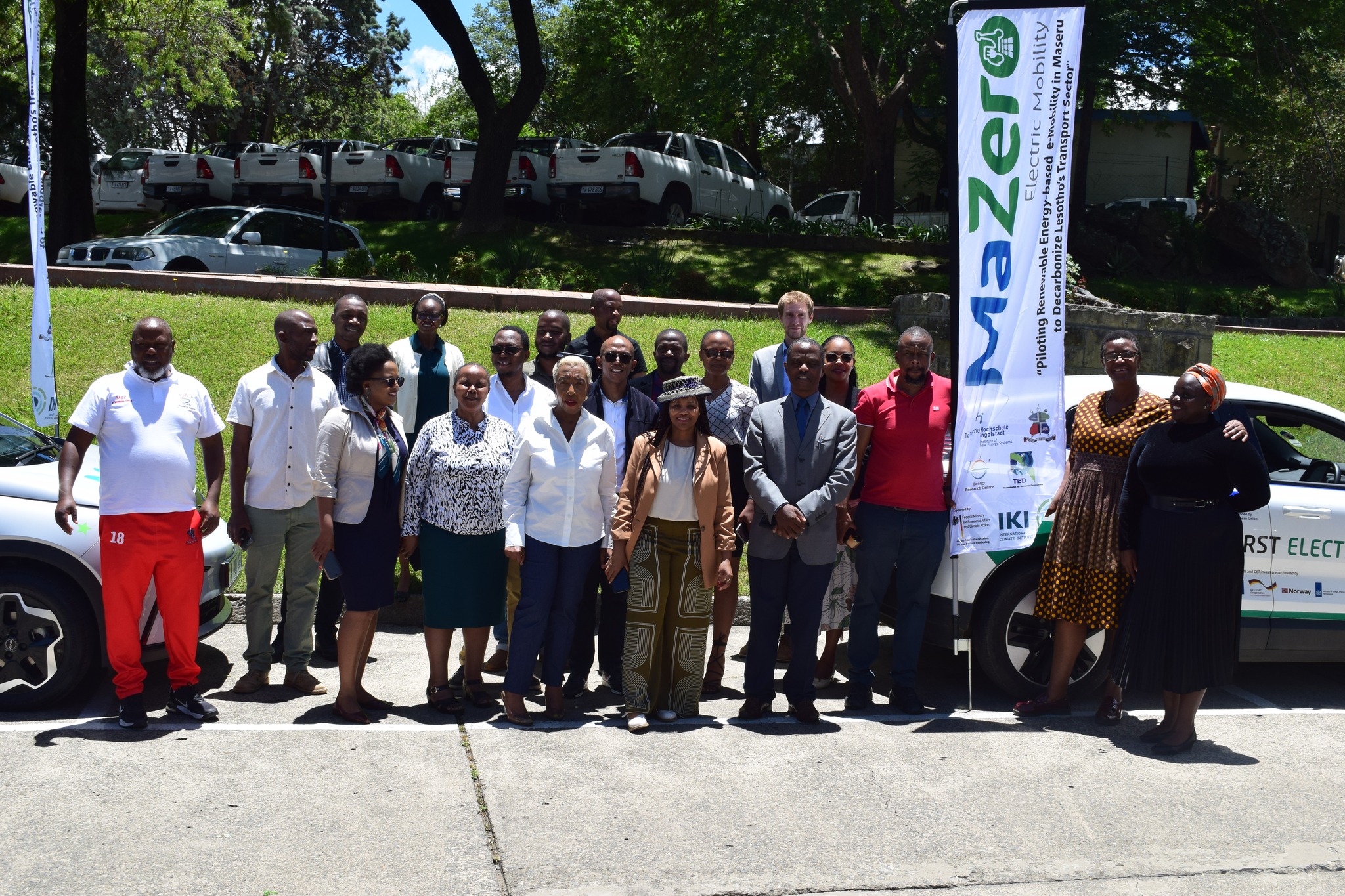
The consultation brought together 22 representatives from government, development partners, institutes of higher learning and the energy and transport sectors to refine priorities and agree on the next steps toward establishing a National EV Policy Framework.
The session featured presentations on the current EV landscape in Lesotho, initiatives led by the National University of Lesotho Energy Research Centre (NUL ERC), and the regulatory measures needed to support electric mobility. GET.transform guided stakeholders through the draft roadmap, gathering additional inputs to ensure it reflects national priorities for sustainable, modern transport.
The meeting also included the official briefing of the MaZero Project, Lesotho’s first renewable-energy–driven e-mobility pilot. Implemented by Technische Hochschule Ingolstadt, NUL REC and Technologies for Economic Development, and funded through Germany’s International Climate Initiative (IKI), MaZero is deploying solar-powered charging and battery-swapping stations and a small fleet of e-vehicles. The project supports national climate and transport policies by demonstrating clean, affordable and practical e-mobility solutions.
Delegates agreed on strengthening coordination across institutions, highlighting the importance of clear governance. Stakeholders confirmed Lesotho’s Ministry of Public Works and Transport as the lead institution for the national e-mobility agenda and emphasised defining the role of the National Meteorological Service (LMS) within the roadmap.
The session highlighted the need to integrate e-mobility topics into school curricula through the Ministry of Education, noting that early exposure to sustainability and clean transport will help young people seize the technological opportunities offered by electric mobility and anchor these innovations in the country’s development.
Additionally, local industry participation, including potential manufacturing of EV infrastructure components, is seen as essential for adapting these innovations to local needs and supporting sustained economic growth. Participants also agreed to establish a national task team to drive and accelerate e-mobility initiatives.
The consultation marked a milestone for the country, reinforcing the growing momentum behind clean, efficient and climate-resilient transport. With continued collaboration and refinement of the EV Roadmap, Lesotho is laying a strong foundation for a sustainable mobility future.


