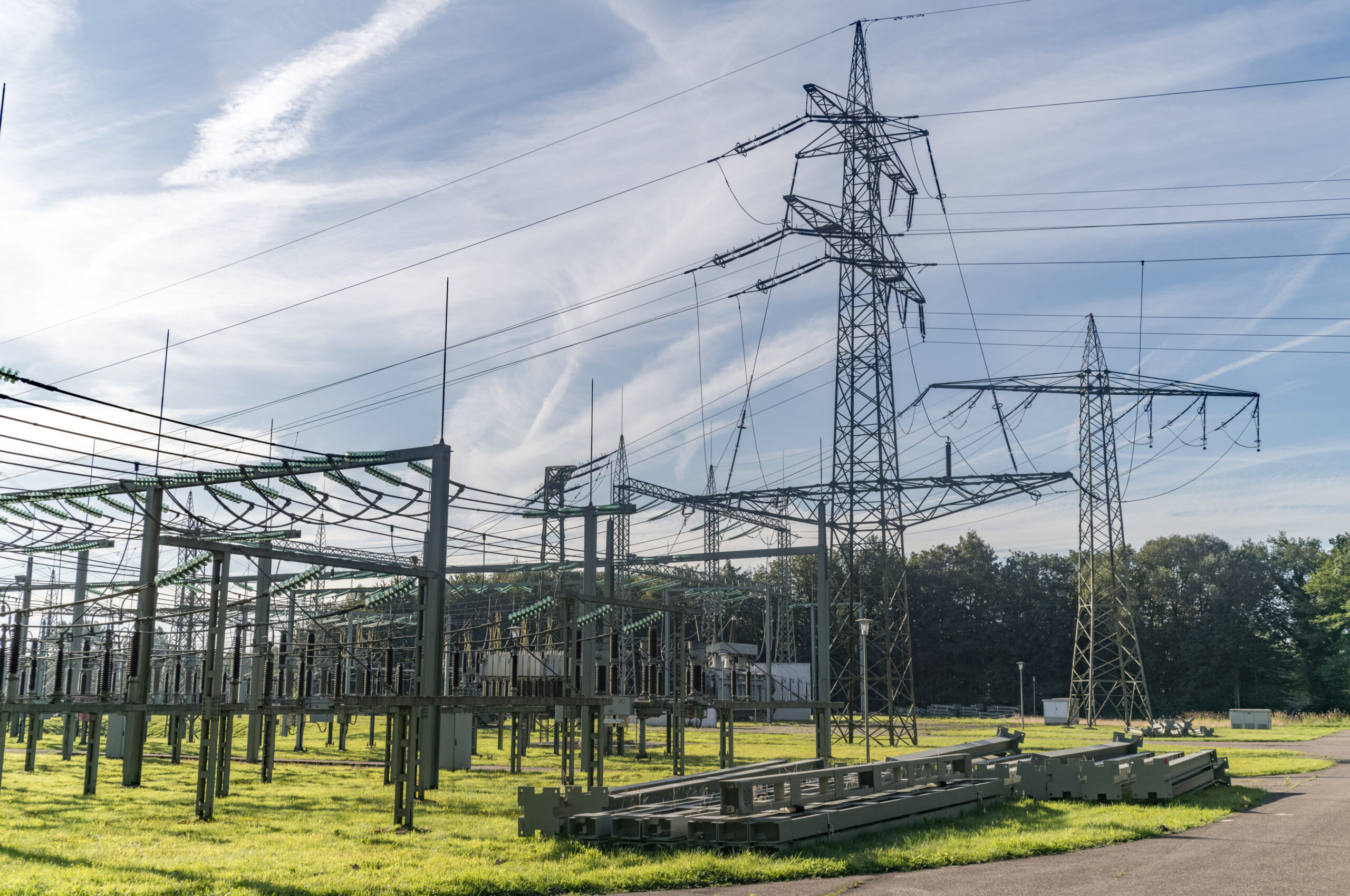

Electricity feels like something modern life can always rely on, until someone decides to take it away. In January 2026, an arson attack on a cable bridge in Berlin cut power to tens of thousands of households in the middle of winter. It took four days to restore, and federal prosecutors took over the case as a terrorism investigation. Roughly 1,200 kilometres further East, the fight over electricity never really pauses. In Ukraine, missiles and drones regularly hit substations and power plants, not just to interrupt supply but to destroy it beyond quick repair. Across the Southern African Power Pool (SAPP) region, the problem looks quieter but no less real. Utilities report theft and vandalism of electricity infrastructure causing power cuts, equipment damage, and losses running into millions of dollars a year. A cross-border interconnector linking Zambia and the Democratic Republic of Congo tripped four times in six months because conductors had been stolen or vandalised. Two continents, three completely different threats, from sabotage to war to crime. Strip away the “why,” though, and they point to the same challenge.
How do you keep a power system stable and secure as the threats against it keep evolving?
The three cases illustrate, in very different ways, just how demanding this challenge is. For Ukraine, it is a question of speed, since strikes keep outrunning repair, hitting the same restored assets again before winter is even over. For Berlin, the vulnerability was more hidden. The network was a ring circuit that looked redundant on paper, but both feeds ran across the same bridge, so a single fire was enough to take out what had looked, on paper, like two independent paths. For Southern Africa, the challenge is attrition, a form of theft that never really stops, with one line repaired only for another to be targeted, until it starts affecting interconnectors that several countries rely on. There is no single fix.
Resilience comes from several things working together: how the physical system is built, the rules that govern it, and the way people share what they learn.
The physical system can become more resilient in two principal ways: Power generation can be spread out, so that the loss of one large plant does not take down essential services. Ukraine has invested heavily into distributed resources, from small gas generators and rooftop solar to battery storage, creating smaller sources of power that can keep critical services running when the wider grid is under attack. The other approach concerns stronger interconnections between systems, so that a shock in one place can be supported from somewhere else.
Ukraine’s grid was synchronised with Continental Europe in 2022, initially as an emergency measure, giving it access to a much larger pool of electricity. Southern Africa is pursuing the same principle. Tanzania has been a member of SAPP for years, but its grid has not been physically connected to the wider SAPP system. The planned Zambia-Tanzania interconnector would change that, linking the two grids and connecting SAPP with the Eastern Africa Power Pool. SAPP is also updating its Transmission Master Plan, with support from GET.transform, to guide future investment in generation and transmission across the region.
Germany, on the other hand, shows why interconnection and distributed generation alone do not guarantee resilience. Its power system is highly interconnected and designed to withstand the loss of individual critical components. Yet the Berlin attack exposed a different vulnerability: several important cable routes shared a single physical crossing, meaning one fire could disrupt several supply paths at once. The incident showed that redundancy only works when alternative routes are independent. It also added urgency to Germany’s wider focus on critical infrastructure protection, reflected in the KRITIS Act, or Critical Infrastructure Protection Act, which sets nationwide minimum standards for the resilience and physical protection of critical infrastructure, including energy.
However, updating infrastructure alone is not enough.
It makes it physically possible to move power, but rules and institutions determine how that power can actually be traded and shared across borders. In Africa, the African Single Electricity Market (AfSEM) aims to create the framework for greater cross border electricity trade as regional interconnections develop. Europe has built a much more integrated electricity market around common rules for cross border trading and coordinated system operation. Ukraine is now moving along the same path, having established the physical connection to Europe first and working towards deeper integration of its electricity market.
Above both the wires and the rules sits a third dimension: information sharing. Threats evolve quickly, and utilities and regulators often only recognise a vulnerability when something goes wrong. Sharing such lessons learnt means others can act before they face the same problem. Europe has built the European Energy Information Sharing and Analysis Centre, where utilities, grid operators, and cybersecurity specialists share newly found vulnerabilities before they can be exploited elsewhere. Southern Africa follows a similar instinct against a different threat. SAPP engages national police forces, Interpol, and the Southern African Development Community (SADC), the region’s broader political and economic bloc, on shared strategies against theft, and reports theft statistics across member utilities so patterns show up region-wide rather than country by country.
Resilience is hard to build alone
The three regions discussed have not fully eliminated the risks they face, but each is adapting and getting better at managing them through constant learning. What they show is that resilience is hard to build alone, because threats don’t respect the boundaries of a single utility, country, or system, and neither do the answers. Distributed generation and new interconnectors help, but they only work at full strength alongside technical cooperation, planners, regulators, and operators sharing methods, data, and hard-won lessons before the next attack, not after. A shared master plan, a shared information platform, a shared line to a neighbour, none of these are optional extras. They are what makes the physical fixes actually work.
This is where regional cooperation and programmes such as GET.transform can make a difference, supporting initiatives such as SAPP’s regional master plan and the African Single Electricity Market. By helping regional institutions plan together, develop common frameworks and strengthen cooperation, they can help turn individual measures into a more resilient power system.
A resilient power system of the future may look less like a fortress and more like a network, spread out enough so that one failure does not bring everything down, connected enough so that help can come from elsewhere, and cooperative enough so that a lesson learnt in one place does not have to be relearned in the next.