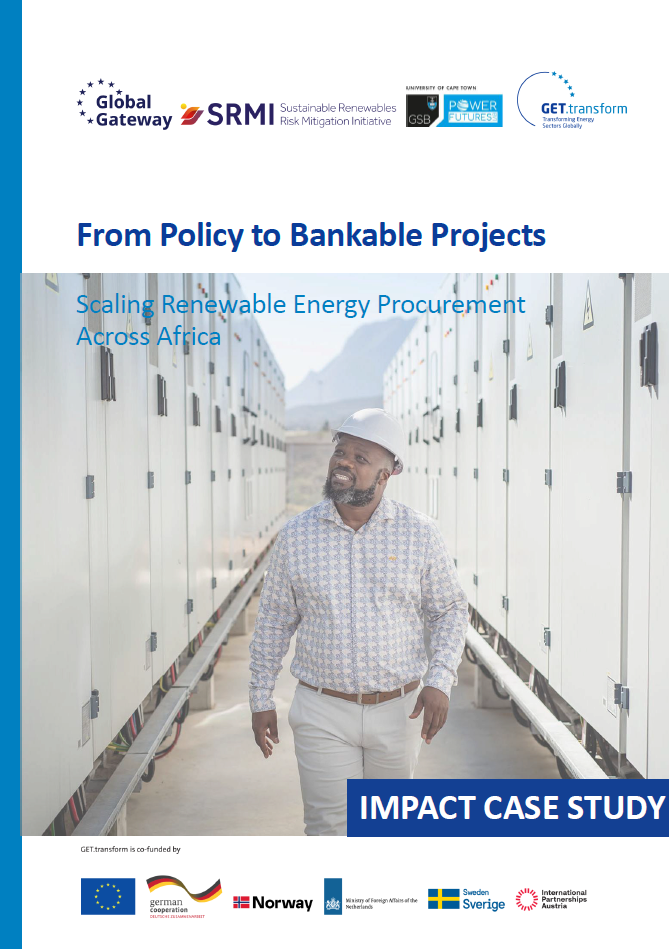

Across Africa, growing electricity demand and the need to accelerate the energy transition call for substantial investment in new generation capacity. While Independent Power Producers (IPPs) offer an important avenue for mobilising private capital, many countries continue to face regulatory, institutional and technical barriers that prevent renewable energy projects from reaching financial close.
Addressing these challenges, the Power Futures Lab and GET.transform developed the Policy Catalyst – Effective Renewable Energy Tendering Window, supporting African governments in designing and implementing transparent, competitive and bankable renewable energy procurement programmes. Working closely with the World Bank Group‘s ESMAP Sustainable Renewables Risk Mitigation Initiative (SRMI) and other development partners, the initiative combines regional peer learning, practical capacity building and tailored technical assistance to help countries translate policy ambitions into actionable procurement programmes.
The first two cohorts brought together 137 public-sector representatives from 29 African countries. Through a ten-month capacity-building programme, participants strengthened their knowledge of tender design, project finance, risk mitigation and power purchase agreements, while developing country-specific action plans to advance renewable energy procurement. These plans also provide a basis for targeted follow-up support from GET.transform and its partners.
Early results are already taking shape. Namibia has launched a 120 MWp solar PV tender, Zimbabwe is preparing a 375 MWac solar PV tender combined with battery storage, and The Gambia has advanced its first competitive renewable energy tender to the request-for-proposals stage. Other participating countries are progressing regulatory reforms and preparing new procurement frameworks. Across the programme, the emerging pipeline of planned and ongoing renewable energy IPP projects is estimated at approximately 7 GW.
The experience demonstrates how regional collaboration and targeted technical assistance can strengthen investor confidence, mobilise private investment and accelerate Africa’s transition towards clean, affordable and reliable electricity systems.