



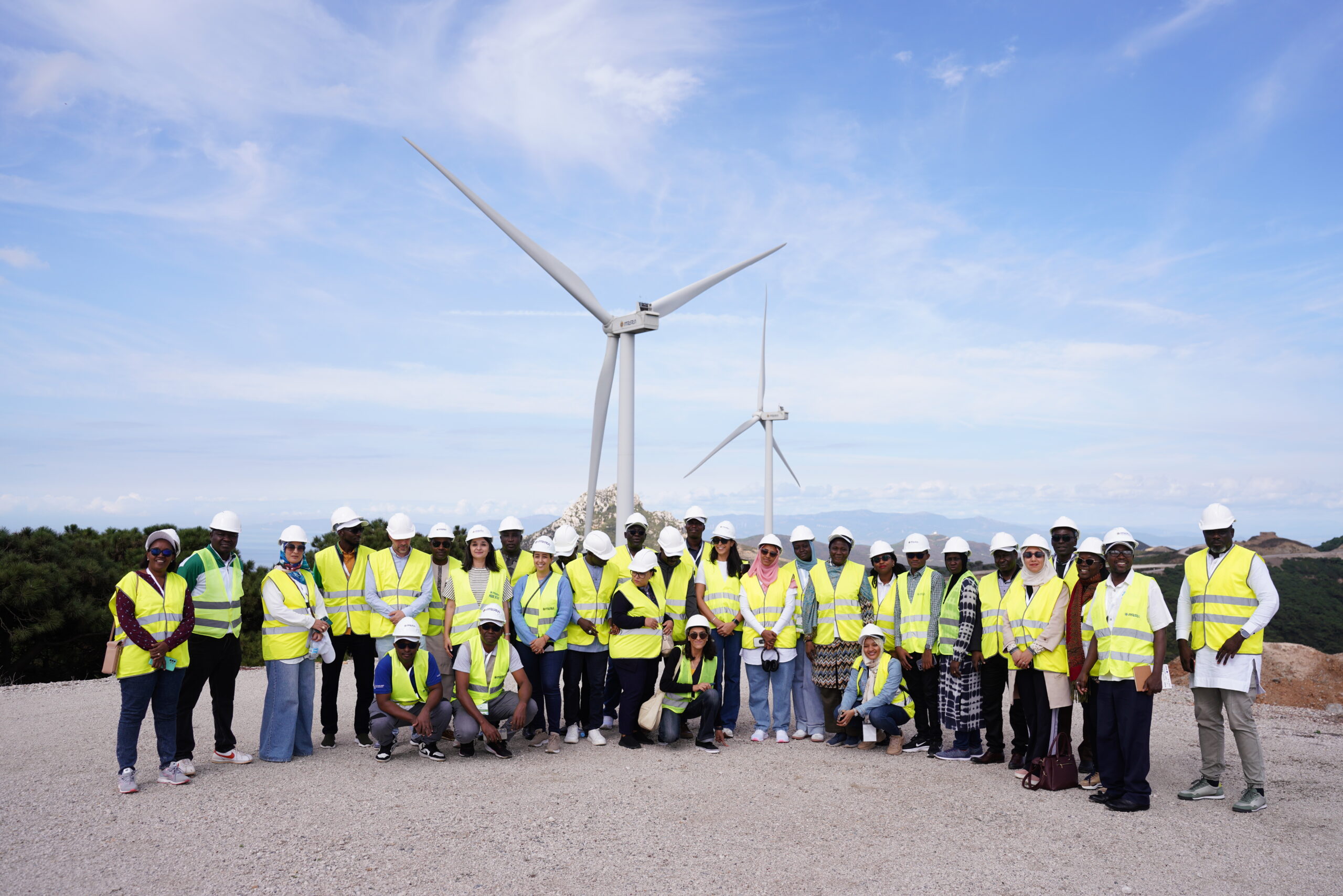
Africa’s energy transition is moving from promise toward practice. Countries long constrained by energy imports are accelerating renewable deployment and building the institutional capacity needed to tender, finance and implement bankable clean energy projects.
Contributing to this shift are 70 experts from 17 francophone African nations that currently take part in the nine-month practitioner programme “Competitive Tenders for Renewable Energy Projects”. The programme is jointly delivered by MASEN, the World Bank’s ESMAP-SRMI Academy, GET.transform, the African Development Bank, and the French Development Agency (AFD).
Since the launch in October 2025, the participants have already completed intensive in-person and virtual trainings designed to strengthen competitive renewable energy procurement capacities and regulatory frameworks. The francophone training builds on the earlier Policy Catalyst Effective Renewable Energy Tendering Window, through which 12 Southern African countries strengthened their competitive renewable energy procurement capabilities.
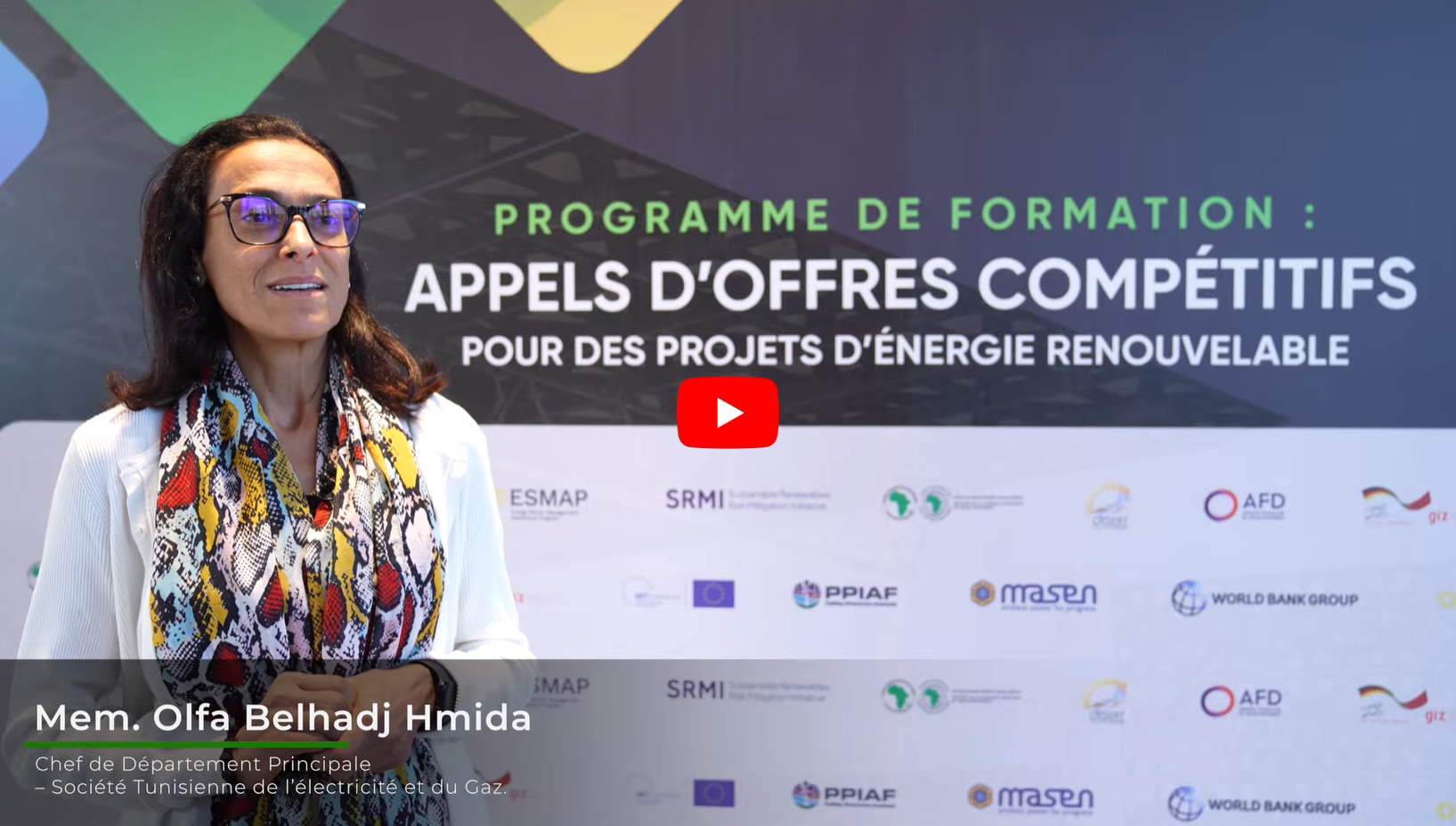
Two countries of the participating countries — Tunisia and Burkina Faso — exemplify both the challenges and opportunities at the heart of this transition. Tunisia, where over 95 % of power has historically been generated from imported natural gas, is targeting 35 % renewable electricity by 2030. Competitive tenders have already yielded operational solar capacity and a pipeline of wind and solar projects totalling several gigawatts. Institutional experts supported through the programme are helping to standardise power purchase agreements, streamline authorisations, and design auction frameworks that are attractive to investors.
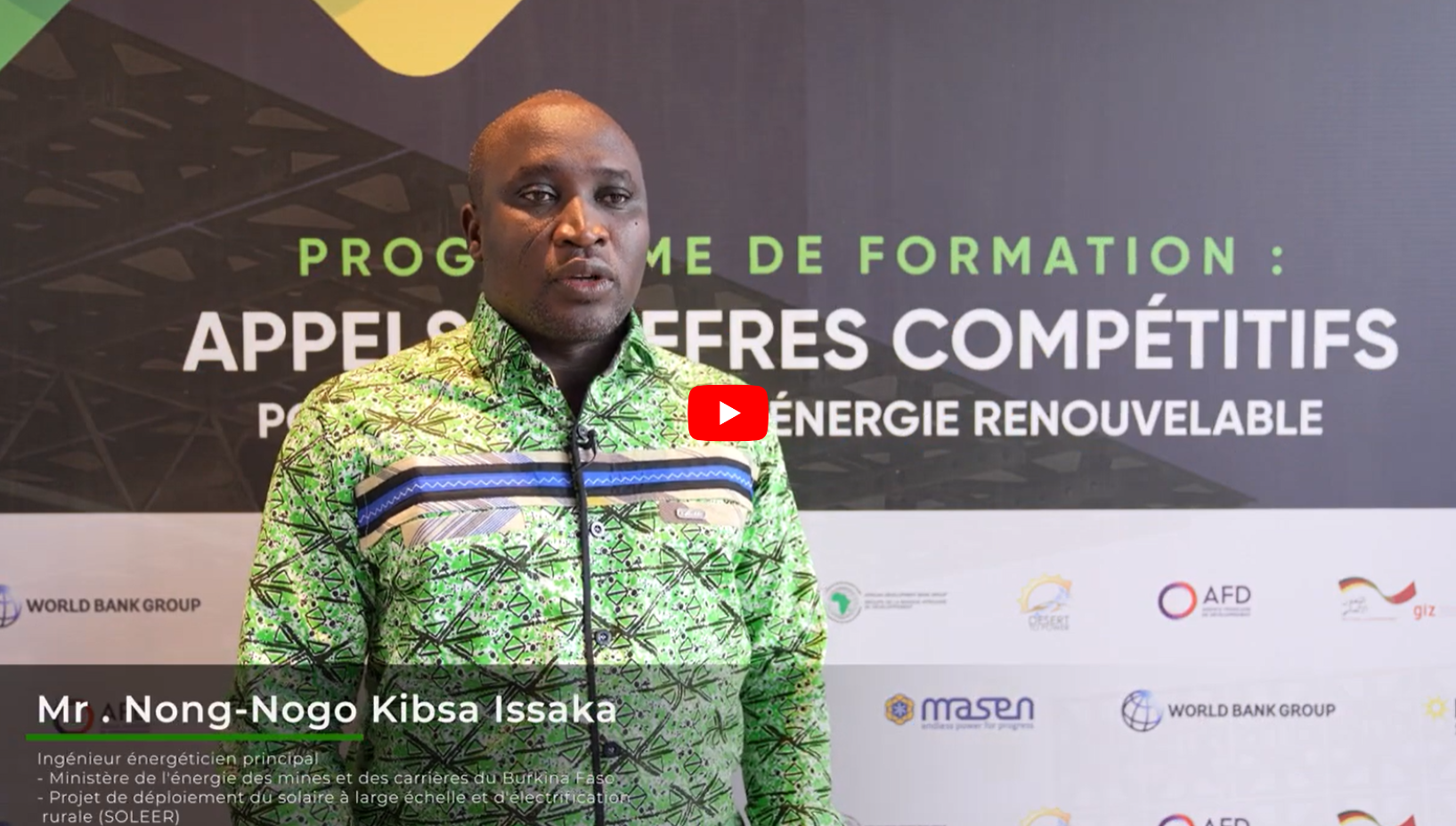
In Burkina Faso, a rapid pivot from diesel-dependent generation toward utility-scale solar has already cut costs and improved reliability. With backing from development partners and technical support through the programme, engineers are developing the country’s first combined solar and battery storage projects, laying the groundwork for deeper penetration of renewables.
These country stories are mirrored across the cohort of senior officials, regulators and utility professionals from Benin, Burundi, Cameroon, CAR, Comoros, Côte d’Ivoire, Gabon, Mali, Mauritania, Niger, Rwanda, Senegal, Chad, and Togo. Throughout the course, participants are mastering risk mapping, tender governance, financing structures and contract negotiation — skills essential for scaling competitive procurement and mobilising private capital.
As the partners prepares for the June 2026 concluding workshop in Morocco, delegates will refine country action plans and deepen their operational work on financing and policy reform, reinforcing an Africa-wide network of practitioners advancing the continent’s clean energy future.
Learn more at esmap.org.