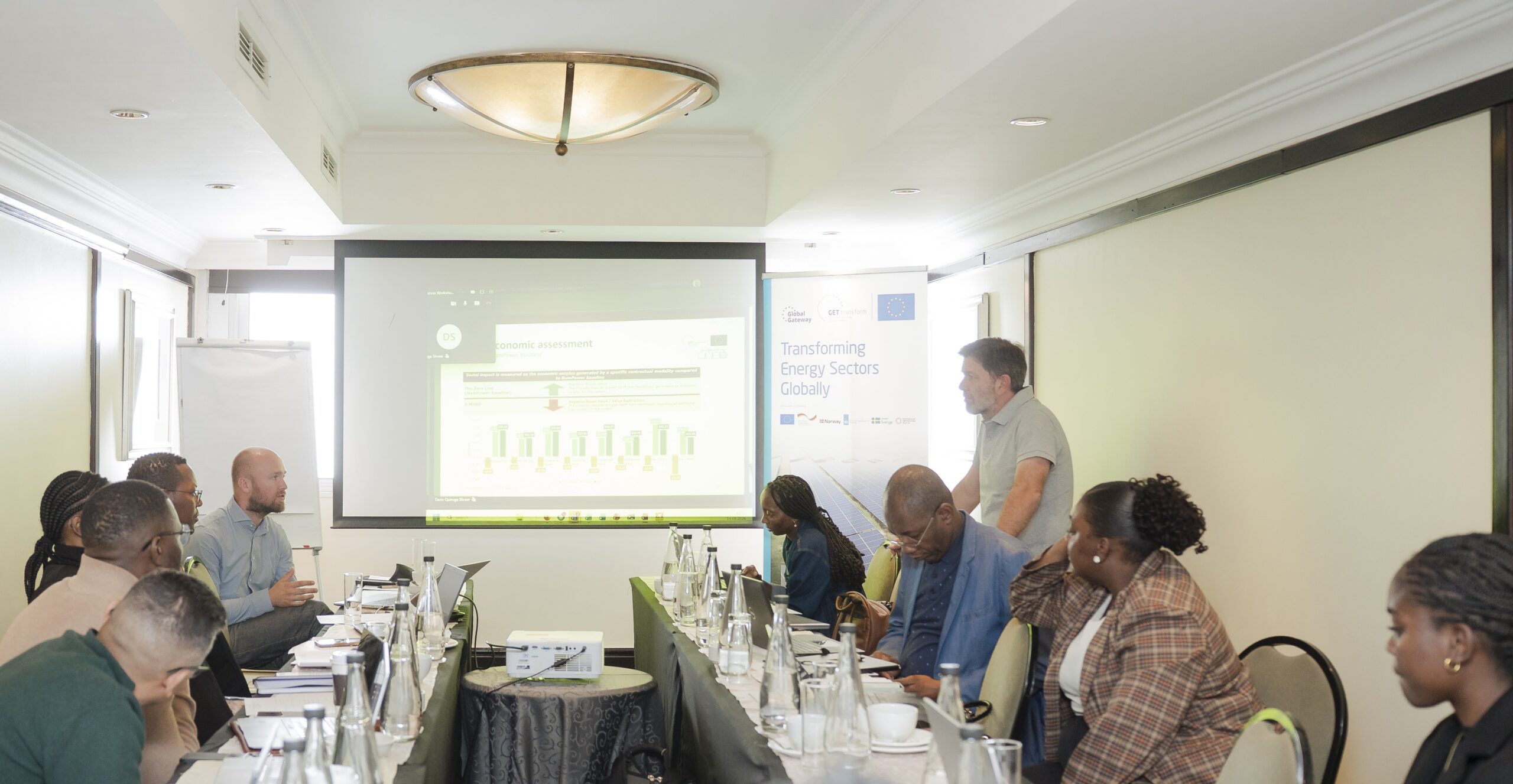


Mid-August, the final workshop on transmission network expansion and energy integration in Namibia’s Southern Transmission Corridor brought stakeholders together to review the Southern Transmission Corridor Assessment in Windhoek.
Led by the Electricity Control Board (ECB) in partnership with NamPower and the Ministry of Industries, Mines and Energy (MIME) and supported by GET.transform, 30 participants reviewed the assessment results and expressed final comments. Study findings conclusions were discussed alongside financial analysis, financing mechanisms, and future activities for donor support.
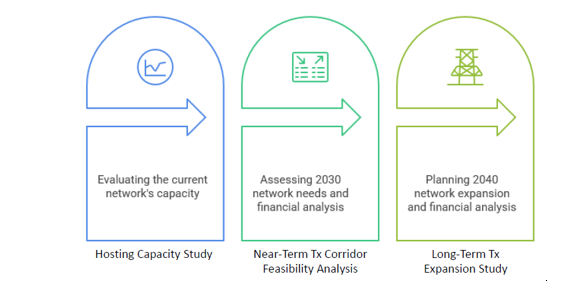
While transmission remains important, megawatt (MW) installation potential determined by this hosting capacity study is crucial because it demonstrates how much power can be connected to the grid without grid reinforcements, exploring how many grid reinforcements would be needed if one would like to have all planned power plants online.
By analysing how much generation capacity can be installed in the Southern section of the current grid, the study identifies the future grid upgrades needed in 2030 and 2040 to enable all planned energy projects.
Namibia’s Southern region has some of the strongest winds and highest solar irradiance in southern Africa, plus a potential development of an offshore gas field. Current power lines were designed to serve a sparsely populated area, rather than to support a new generation industry. Near the best wind sites, the existing network can absorb roughly 55 megawatts of new generation, around one modern wind farm. A reinforced network could support more than 2,200 megawatts nationwide.
Namibia currently imports a significant share of its electricity from its neighbours. Closing that gap with domestic generation, and eventually selling surplus power into the region, would change the country’s position from buyer to seller.