
Last week’s webinar by the Regulatory Assistance Project (RAP) brought together regulators, utilities, and energy experts to examine how African countries are putting distributed generation (DG) policies into practice. Moderated by Bhoomika Tiwari of GET.transform, the session focused on real-world regulatory developments, including procedural and technical frameworks, tariff design, and emerging sector trends.
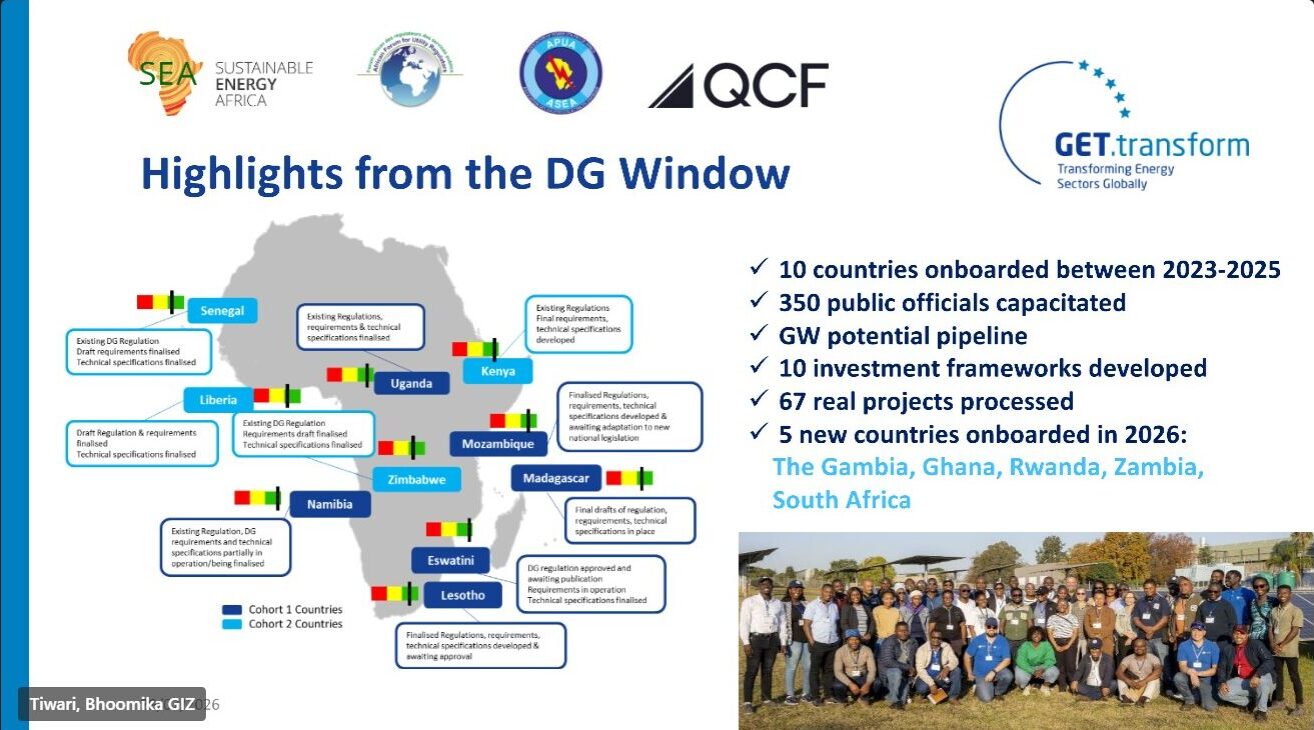
Country insights from Eswatini and Lesotho demonstrated tangible progress. Both countries had participated in the Policy Catalyst DG Window as offered by GET.transform in partnership with Sustainable Energy Africa (SEA), the African Forum of Utiltiy Regulators (AFUR) and the Association of Power Utilities of Africa (APUA). Eswatini and Lesotho have introduced net-billing approaches, with tariffs reflecting the avoided costs utilities incur when sourcing power from embedded generators rather than large-scale plants. A major milestone was also announced: Eswatini has officially operationalised its Embedded Generation bylaws, marking a significant step forward in enabling distributed energy solutions.
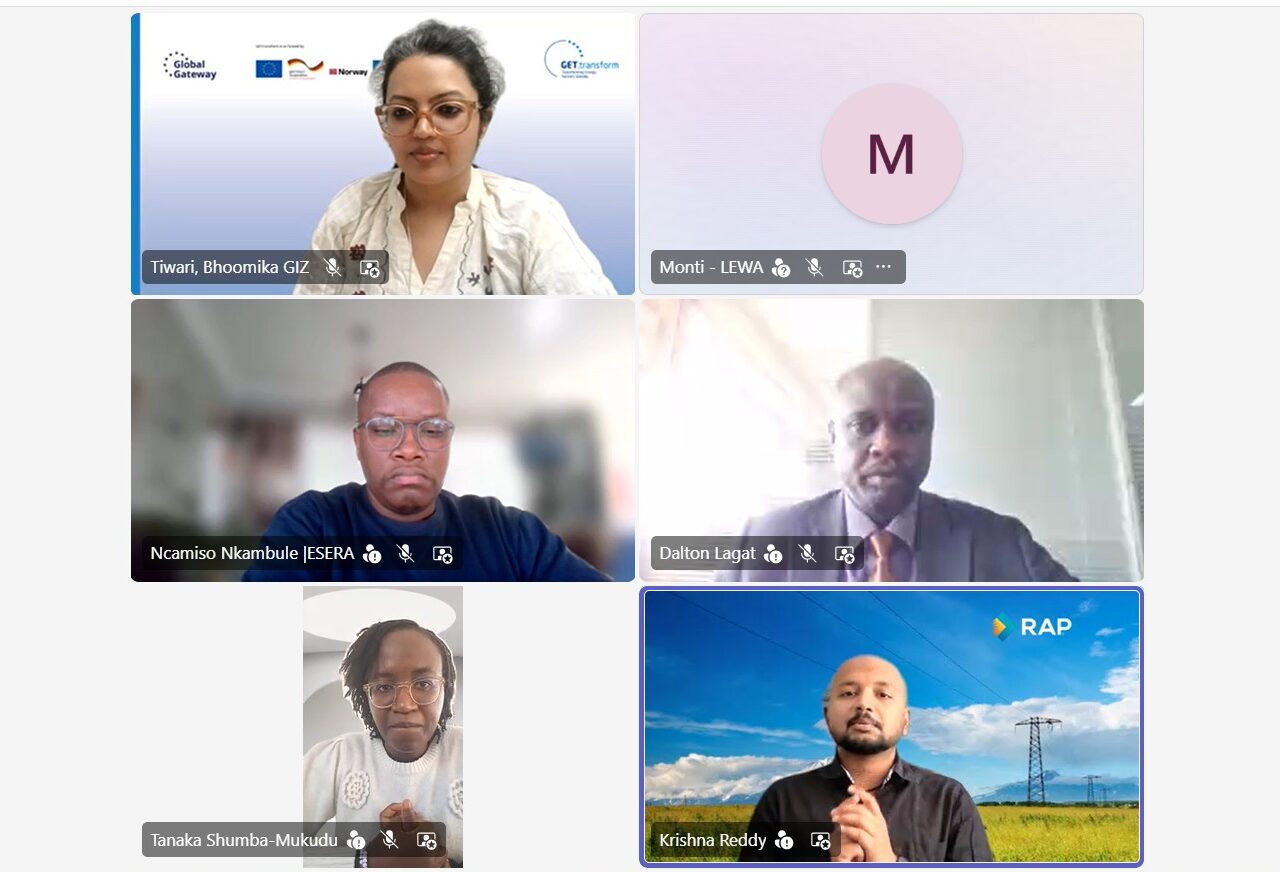
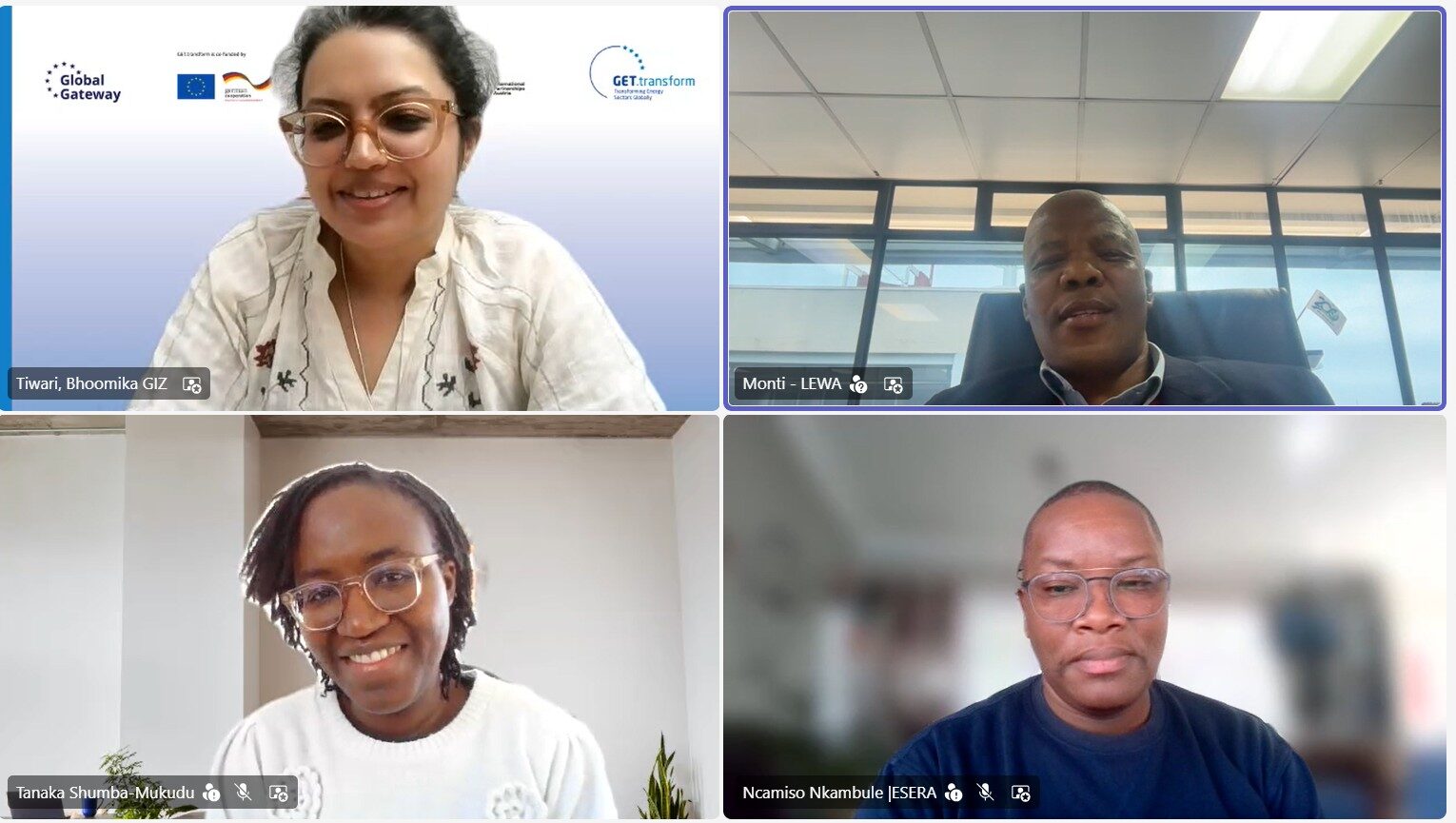
The full expert panel comprised Monti Ntlopo, Manager of Technical Regulation, Lesotho Electricity and Water Authority (LEWA), Ncamiso Nkambule, Electricity Regulation Engineer, Eswatini Energy Regulatory Authority (ESERA), Dalton Lagat, Sales Manager, Kenya Power and Lighting Company (KPLC) and Tanaka Shumba-Mukudu, Project Manager at SEA.
Across discussions, participants emphasised that strong technical regulation is just as critical as economic frameworks. Ensuring safe grid integration, maintaining system stability, and enabling effective planning are essential as DG continues to scale.
The webinar also highlighted a broader shift across the continent. Over the past three to four years, regulators and utilities have moved from caution to active support for distributed generation—reflecting increasing pressure to meet rising electricity demand while diversifying supply sources.
Learn more about DG’s potential in Africa’s energy future in this video by SEA.