In late August, a workshop on Scenarios for Long-Term Energy Planning convened 32 key actors from the public and private sectors, academia, and civil society to receive input to collectively develop possible strategic scenarios of Panama’s energy system through 2040 and identify the public policy decisions that differentiate these scenarios.
The Director of Electricity at the National Secretariat of Energy, Lisnely Valdés, opened the workshop, followed by GET.transform expert, Irene Cañas Díaz, who facilitated the event. Alessia De Vita, from GET.transform, also delivered keynote presentations on the international energy landscape and energy planning. The event was hosted by the National Secretariat of Energy in collaboration with GET.transform to define scenarios and collect vital information to update the National Energy Plan (PEN) 2026-2040.
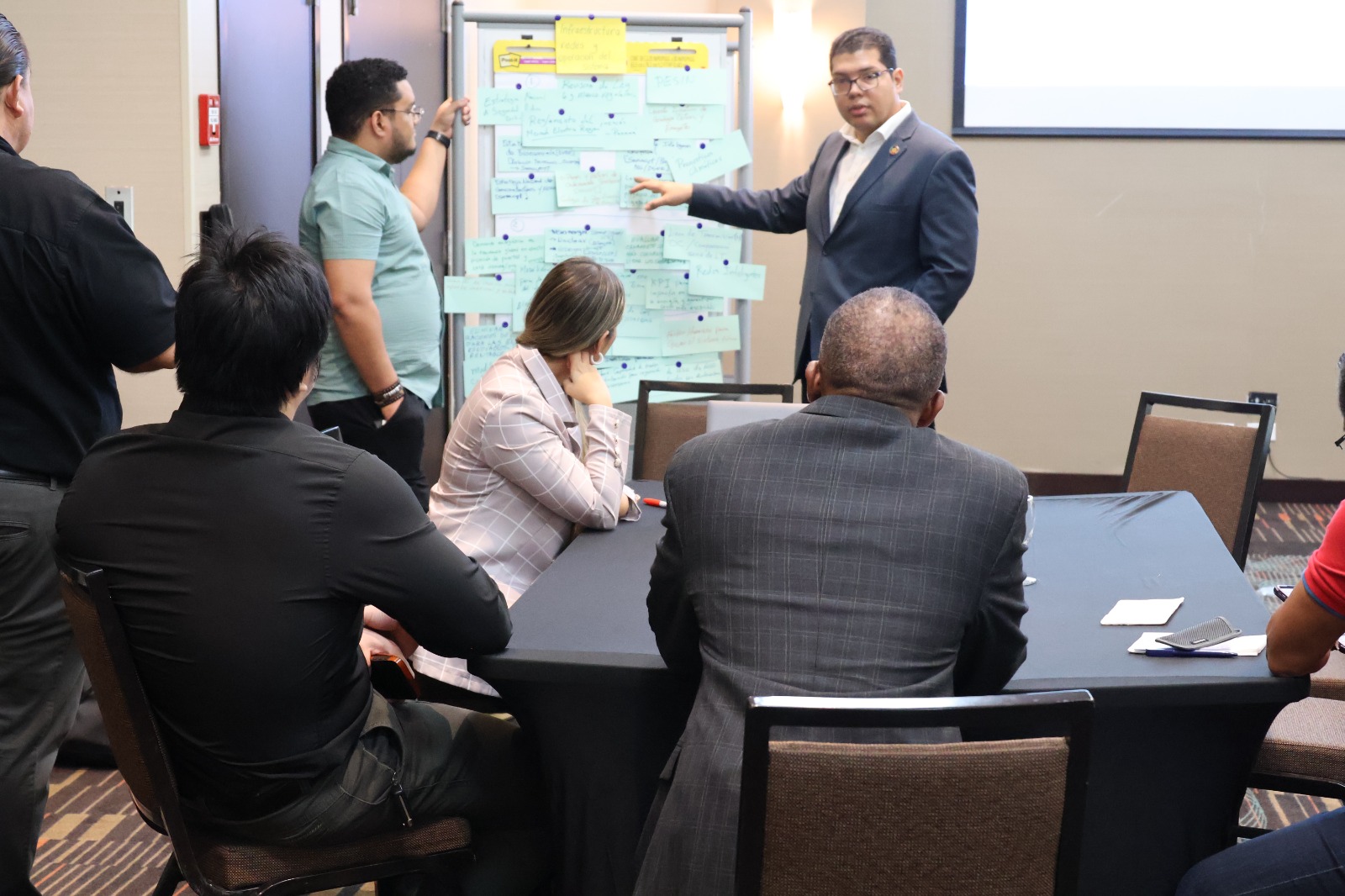
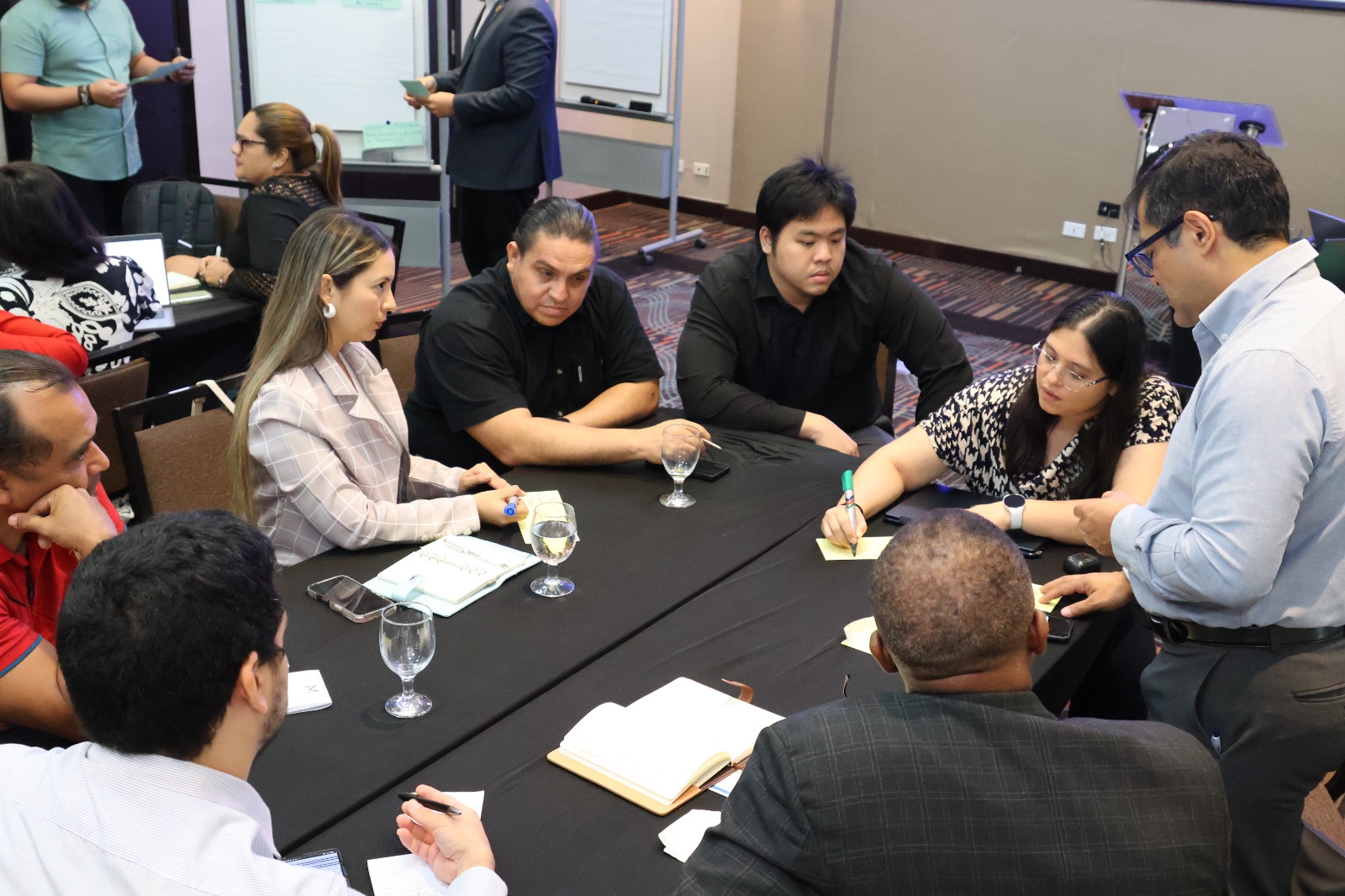
During the workshop, participants rotated in working groups between different stations, each with a distinct theme, to discuss questions around Analysing Infrastructure and Networks, Supply and Security of Supply, and Demand, Efficiency and Electrification.
15 different institutions participated in the workshop, such as Ministry of Economy and Finance (MEF), National Energy Secretariat (SNE), National Secretariat of Science, Technology and Innovation (SENACYT), Panama Electric Energy Distribution Company (ENSA), University of Panama (UP), National Dispatch Center (CND), Ministry of Environment (MiAmbiente), Public Services Regulatory Authority (ASEP), Technological University of Panama (UTP), Comptroller General of the Republic (CGR), Panama Institute of Meteorology and Hydrology (IMHPA), Land Transit and Transportation Authority (ATTT), Ministry of Housing and Territorial Planning of Panama (MIVIOT), Panama Canal Authority (ACP) and more.
Stakeholders discussed the following questions:
What plans, strategies, programmes, and policies need to be considered in developing the National Energy Plan (PEN)?
What technological alternatives must be evaluated for this issue?
Which rule or regulation enables or hinders the implementation of improvements in this area?
Discussions strengthened stakeholders’ technical knowledge and capacity to model future scenarios of Panama’s electricity sector.
The event was followed by a high-level workshop in early September by EU–Central America Partnership Facility (EUreCA) with heads of institutions and private sector representatives as well as unions and academia to present the PEN. Matteo Banti, Head of Cooperation at European Commission, was also present.
The ongoing preparation process of the PEN continues with the support of several organizations and multilaterals such as United Nations Development Programme (UNDP), Inter-American Development Bank (IDB), Euroclima and GET.transform which will culminate in its final publication in April of 2027.
A consulting firm will be hired by Euroclima to support the SNE with the construction and modelling of scenarios for the 2026-2040 PEN.
This workshop highlights the importance of collaborative, long-term energy planning in shaping Panama’s future, ensuring a successful and sustainable energy transition.