

In Panama, the process of updating the National Energy Plan 2026-2040 (Plan Energético Nacional or PEN) has begun. The Plan is a roadmap for Panama´s energy sector to ensure a reliable and sustainable supply. Panama’s National Energy Secretariat decided to partner with GET.transform to review and update the plan which will guide the sector´s policies, investments and strategic actions, to diversify the energy matrix and benefit the country´s economic and social development.
Formulating the PEN requires a comprehensive analysis of the sector through public consultations and workshops at the national level, where information is collected and analysed to construct a robust baseline for the sector. The baseline is used to define prospective scenarios for 2040.
The new PEN process started in June with virtual workshops organised by GET.transform with support from the Inter-American Development Bank (IDB) to review the results of the 2015-2050 PEN and discuss trends to inform the 2026-2040 update. GET.transform presented on energy sector trends and future perspectives to actors from the public and private sector as well as unions and multilaterals.
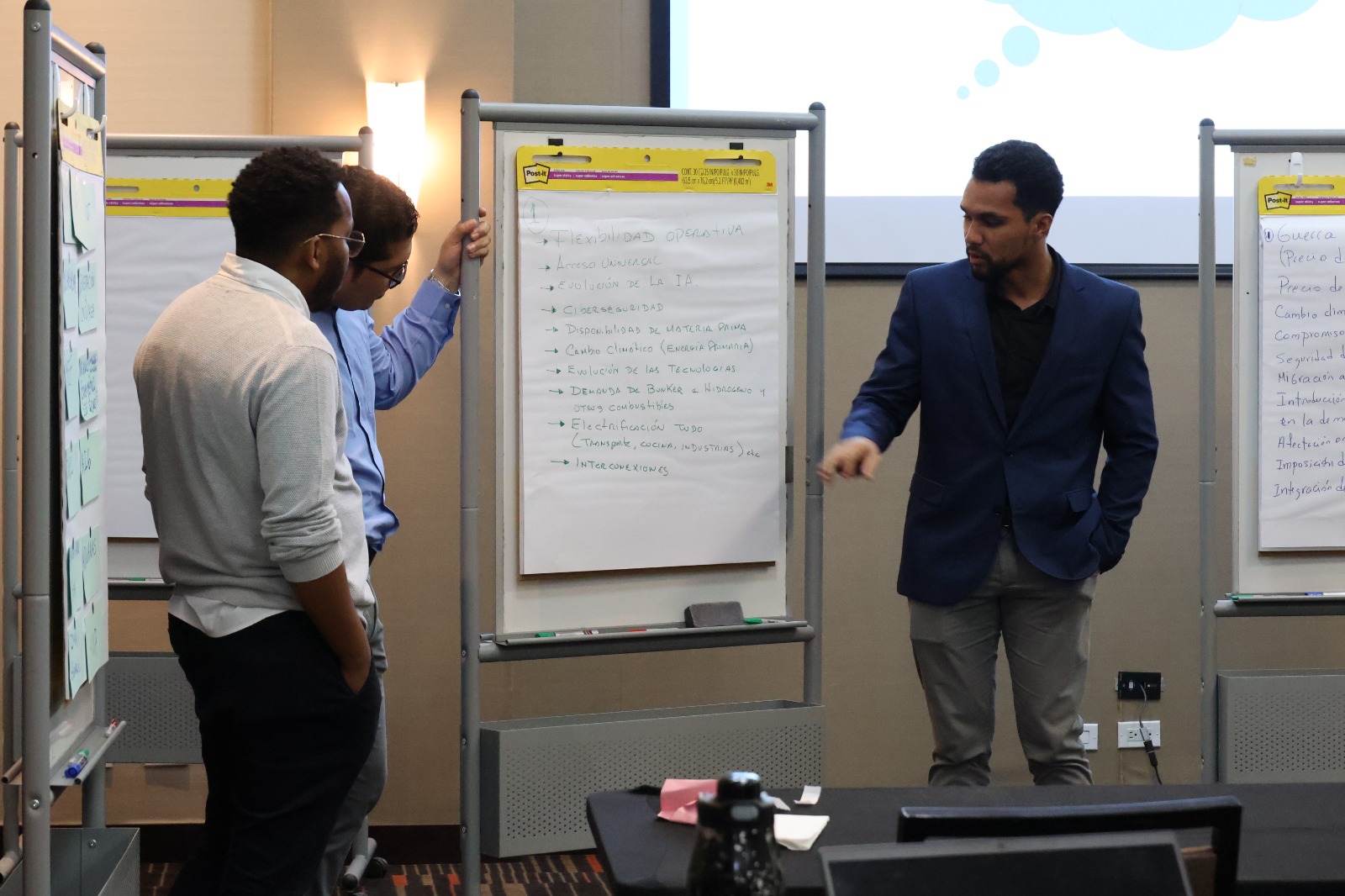
The SNE then hosted a two-day course on Long-Term Energy Planning with GET.transform in late August to train officials and technical teams from public institutions on tools, methodologies, and strategic frameworks to design, implement, and monitor future energy plans for the transition to sustainable and socially inclusive energy systems.
GET.transform experts, Alessia De Vita and Irene Cañas, led the course on the fundamentals of long-term energy planning, a global energy outlook, and governance and best practices from other countries. Participants also learned about energy planning tools and energy scenarios, a fundamental element for analysing the future trajectories of the energy system under different socioeconomic, technological, regulatory, and environmental assumptions.
Energy scenarios allow stakeholders to evaluate the evolution of energy demand and supply, infrastructure needs, the incorporation of new technologies and the effects of existing and future public policies, as well as their economic and environmental impacts. Stakeholders were also introduced to challenges in planning electrical systems and data inputs.
19 participants from a variety of institutions were present, including National Energy Secretariat (SNE), National Authority of Public Services (ASEP), Electric Transmission Company S.A. (ETESA), Ministry of Environment (MiAmbiente), National Dispatch Center (CND), Ministry of Economy and Finance (MEF), Technological University of Panama (UTP), National Institute of Statistics and Census and (INEC).
The course methodologies and strategic frameworks are critical for updating and constructing the National Energy Plan 2026-2040 as the Government of Panama, through the National Energy Secretariat, strengthens its long-term energy planning to develop a comprehensive vision of the energy sector´s development to support decision-making based on technical evidence. The 18-month process will culminate in the validation and official publication of the PEN, expected in April of 2027.
Related to this training, the National Energy Secretariat has created a general methodological guide for updating the Energy Plan, consisting of a Diagnostic Report of the Energy Sector analysing public policies, climate commitments and technological trends underpinning the trend trajectory of the energy sector to 2040.
With this training, stakeholders gain the tools they need to plan a lasting, resilient and inclusive energy system for Panama.