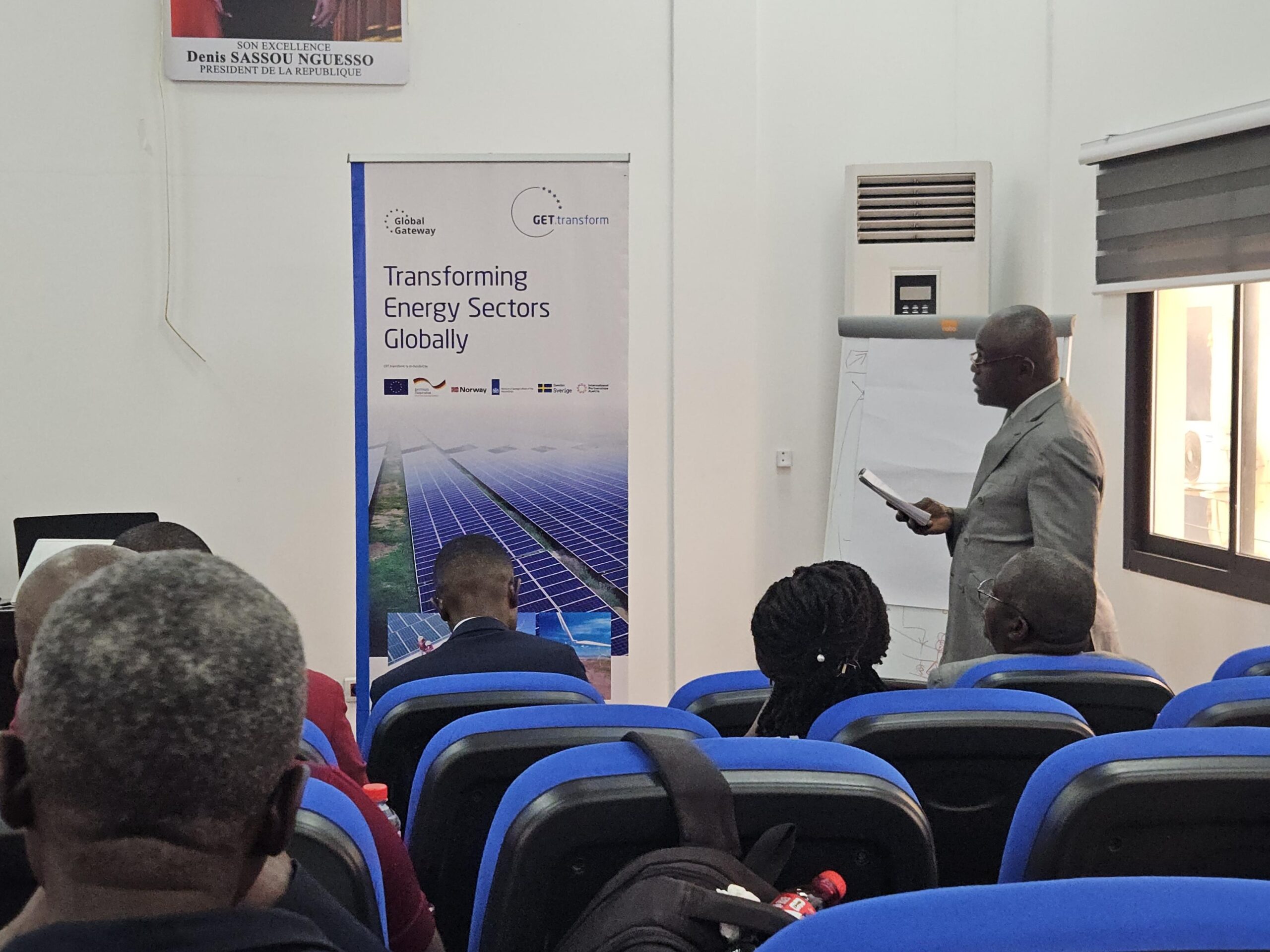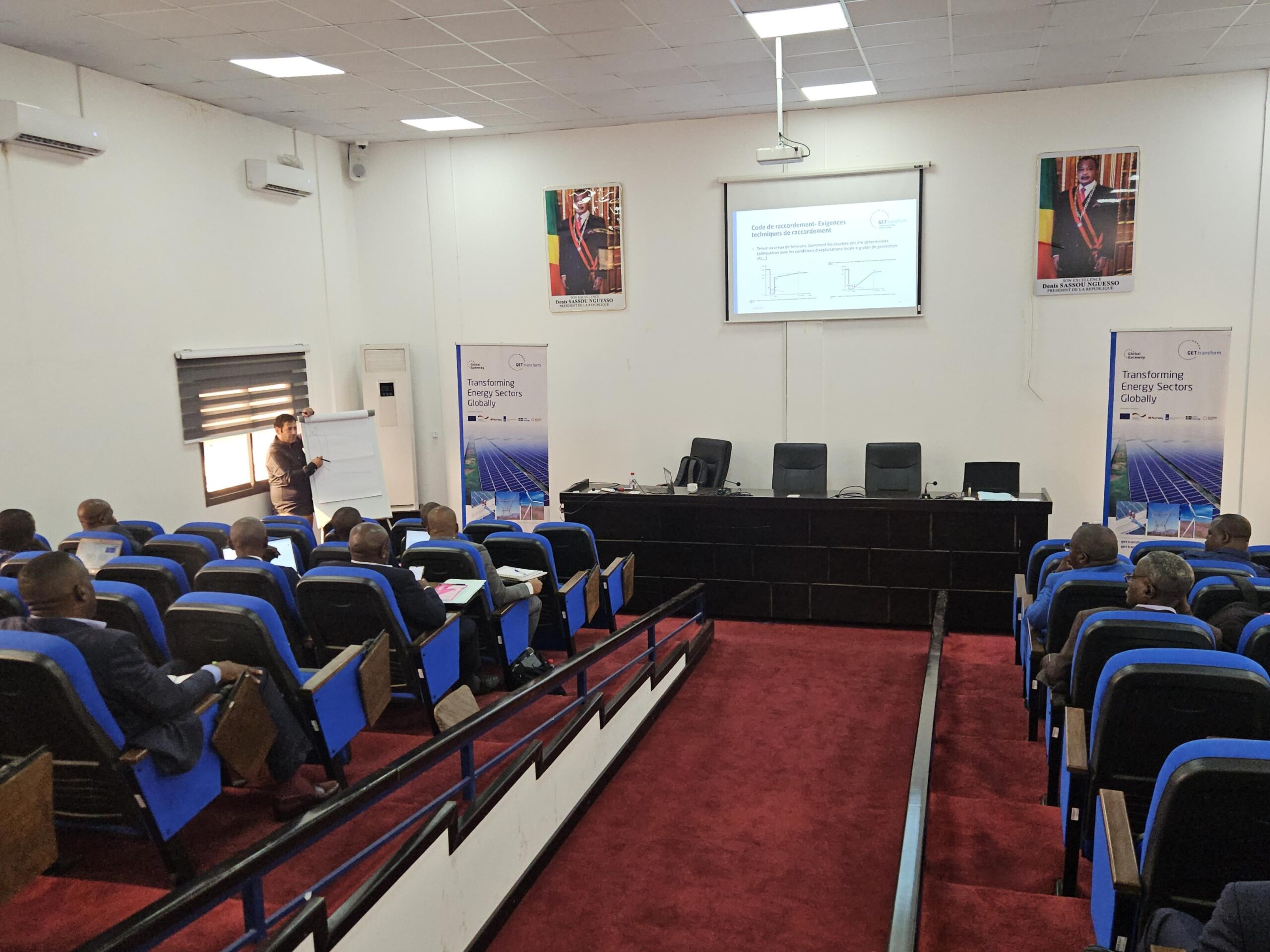
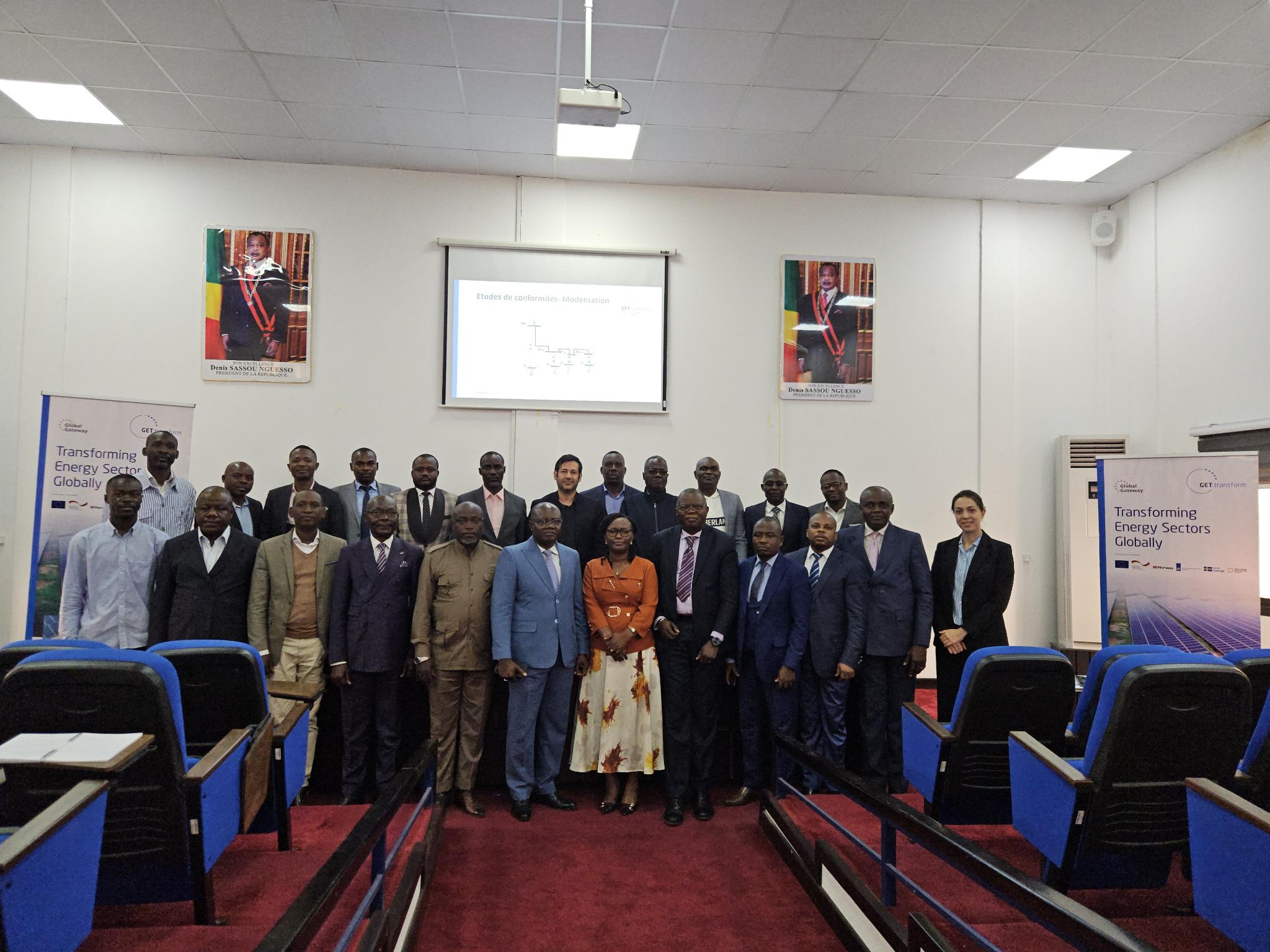
The Republic of Congo is taking an important step towards modernising its electricity sector through the revision and updating of its national Grid Code.
A three-day workshop brought together key public institutions and sector stakeholders to review the existing Grid Code, examine regional and international best practices, and identify priorities for its future development. Benchmarks from countries including South Africa, Ghana, Madagascar, Algeria, Germany, France, the United Kingdom and Ireland, as well as the Central African regional Grid Code, informed the discussions.
The workshop was delivered in partnership with GET.transform and brought together the main institutions involved in the country’s electricity sector, including the General Directorate of Energy (DGE), the Electricity Sector Regulatory Agency (ARSEL), the national utility responsible, on a transitional basis, for the generation, transmission, distribution and commercialisation of electricity (E2C), the National Rural Electrification Agency (ANER), the Energy Sector Development Fonds (FDSEL), and the Centrale Electrique du Congo (CEC).
The Republic of Congo led the groundwork for the future framework, with stakeholders agreeing on the structure and content of a modern Grid Code covering both transmission and distribution.
The updated framework aims to establish clear and transparent connection processes, strengthen grid stability, reliability and performance, and facilitate the integration of renewable energy. It will also clarify the roles and responsibilities of utilities, regulators, power producers and other stakeholders, while creating a more enabling environment for public and private investment.
The workshop also identified further capacity-building priorities, including connection studies, grid planning, stability and hosting-capacity assessments, and flexibility studies.
A pre-validation workshop is planned within the next two to three months, with completion of the updated Grid Code targeted by the end of the year.