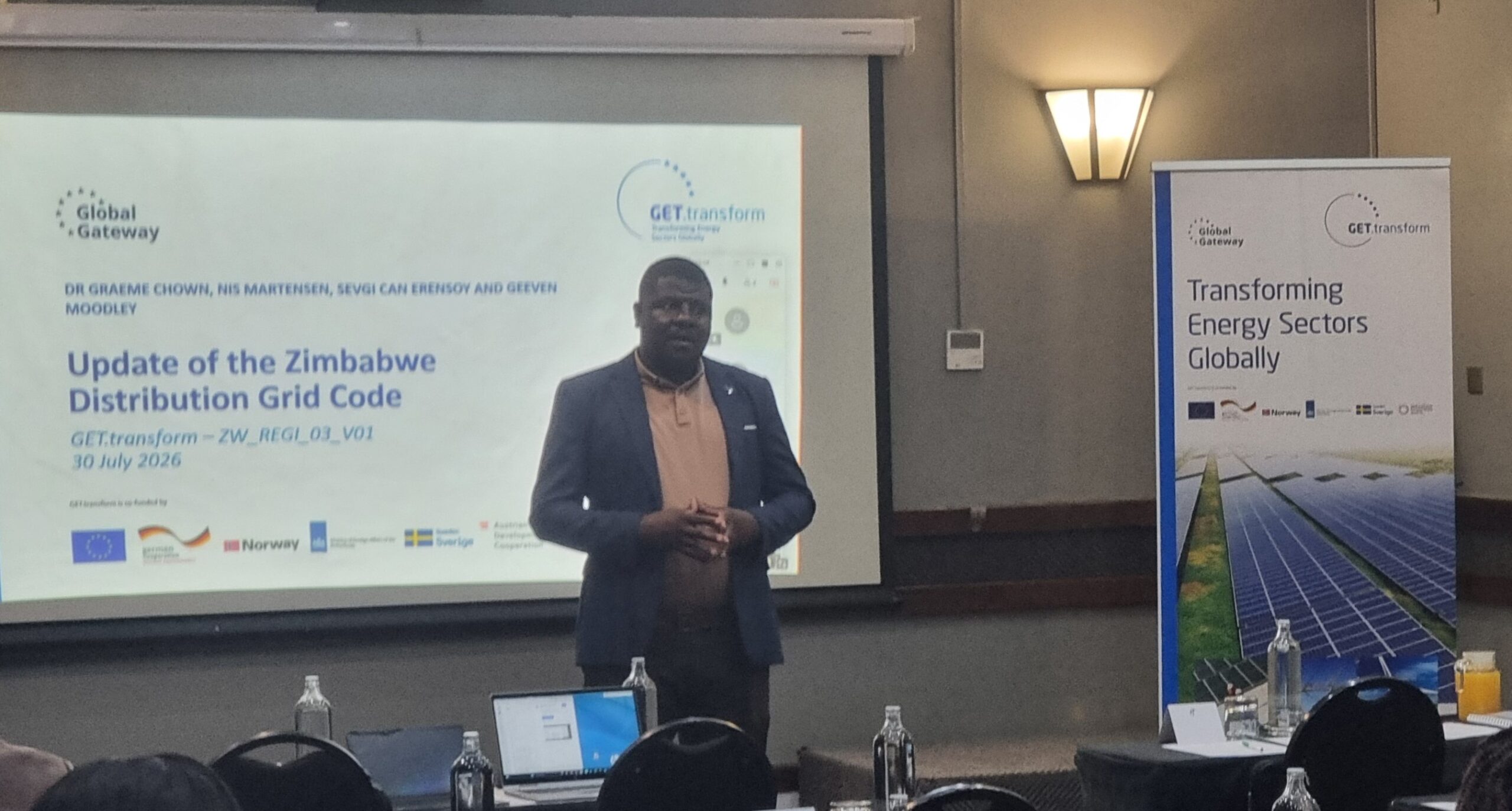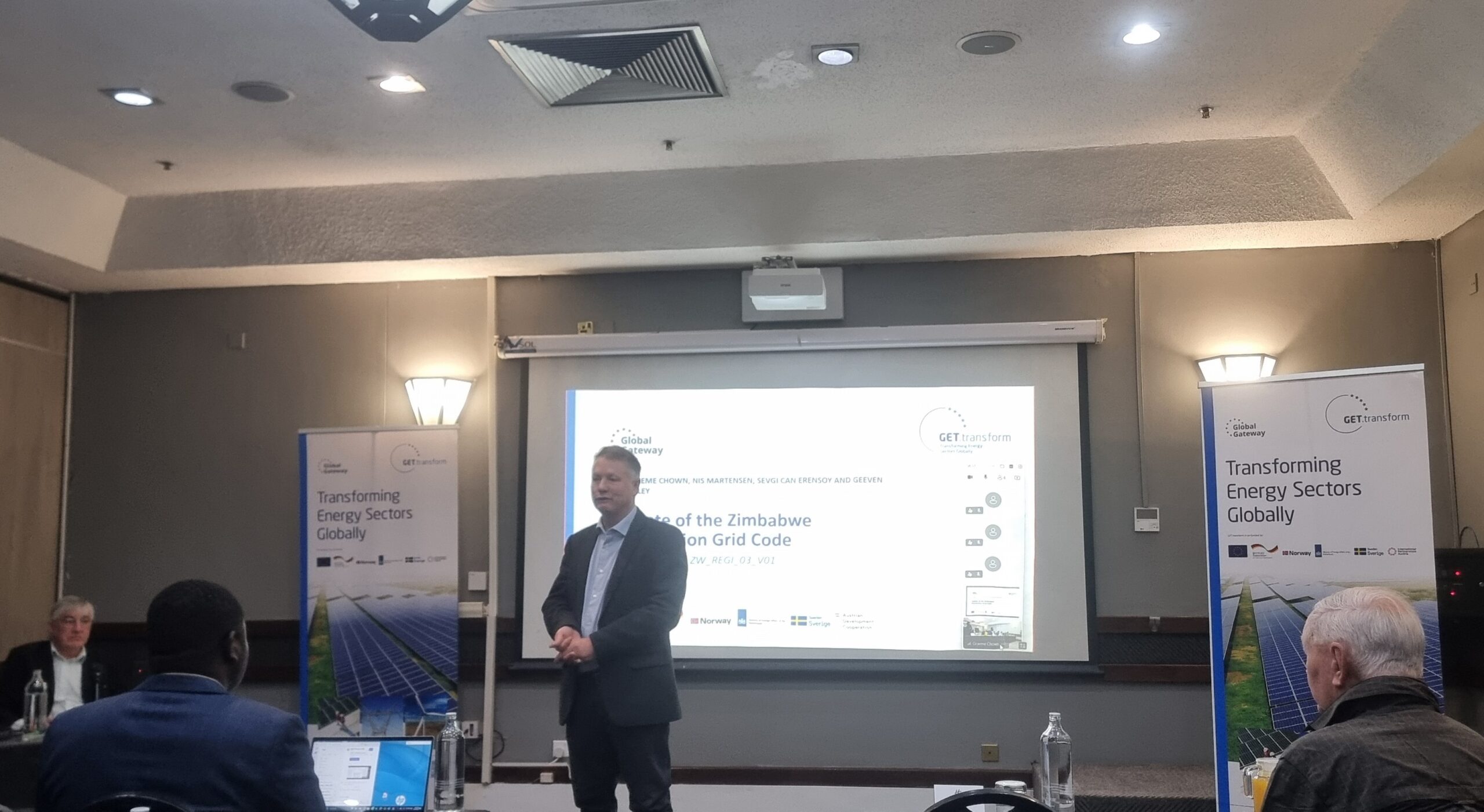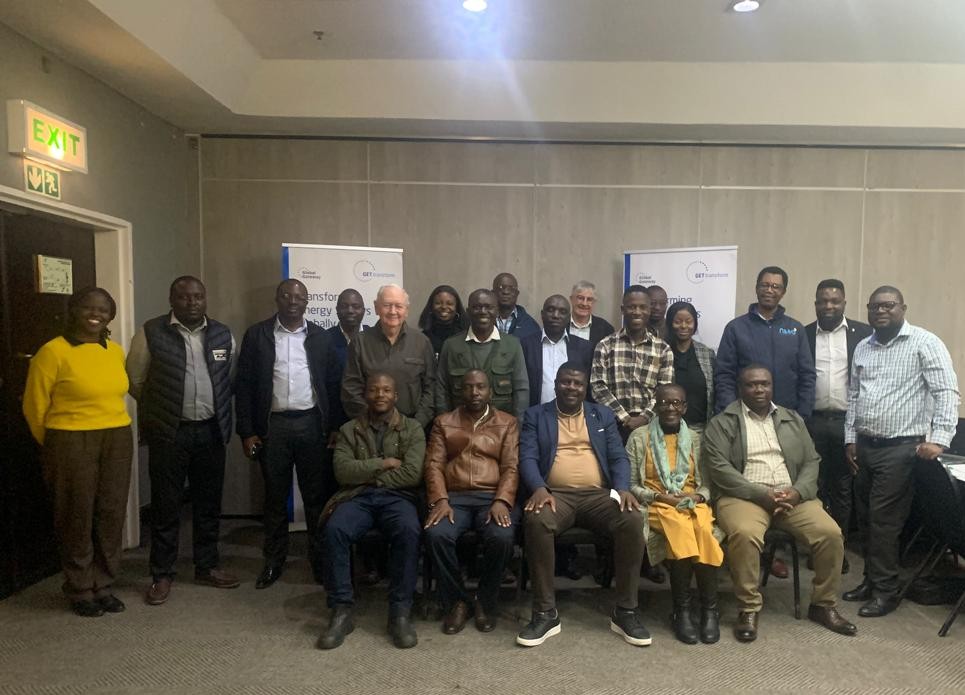

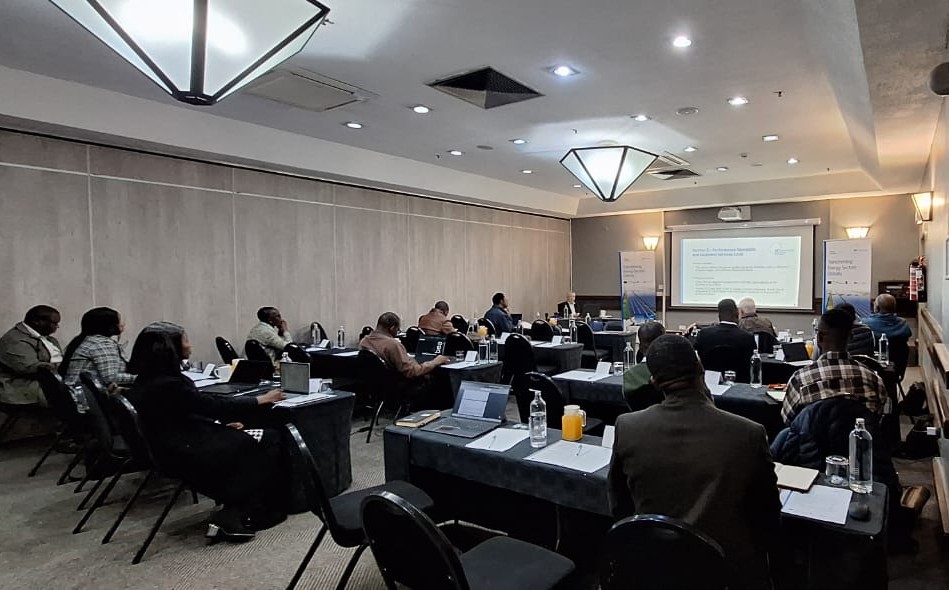
Around 20 representatives from Zimbabwe’s energy sector convened in Harare for a two-day Stakeholder Engagement Workshop on the review of the country’s Transmission and Distribution Codes. The workshop forms part of Zimbabwe’s ongoing grid code update in partnership with GET.transform. It provided a platform for technical experts to discuss proposed amendments to the Grid Code Suite and ensure alignment with Southern African Development Community (SADC) and international standards.
The represented stakeholders included the Ministry of Energy and Power Development, Zimbabwe Energy Regulatory Authority (ZERA), Zimbabwe Electricity Transmission and Distribution Company (ZETDC), Zimbabwe Power Company, Renewable Energy Agency, Standard Association of Zimbabwe (SAZ), Intensive Energy Users Group (IEUG), Nyangani Renewable Energy (NRE), and EUREKA Gold Mine.
The workshop focused on the revision of the Transmission Code sub-codes, the proposed introduction of a new Market Code, revisions to the Distribution Code, and the development of a Connection Code. Participants also reviewed governance provisions, technical standards and regulatory frameworks needed to strengthen Zimbabwe’s evolving electricity sector.
Opening discussions highlighted the importance of improving governance through clearer compliance mechanisms, dispute resolution processes and meeting procedures. Cybersecurity also emerged as a priority, with stakeholders recommending closer alignment of technical parameters with Southern African Power Pool (SAPP) requirements. Market reform featured prominently, with participants debating third-party access, cross-border electricity trading and the future integration of a Market Code. It was also proposed that the Use of System provisions be treated as a separate commercial code, similar to tariff guidelines, rather than being included in the Grid Code. Participants noted that Zimbabwe could generate a surplus of approximately 2,000 MW by 2030, supported by new thermal and solar generation projects, while emphasizing the need for effective system balancing and grid reliability.
Attention was equally given to the Distribution Code and regional harmonisation. Proposals included public feeder capacity maps, modernising metering systems to support net metering, revising tariffs for large mining operations, strengthening information security through ISO 27001 standards, and improving customer communication through mobile applications, SMS and online platforms. Participants also discussed centralising GIS data management and aligning Zimbabwe’s framework with emerging regional grid standards.
Stakeholders agreed to submit comments on the Transmission Code and the Distribution Code within August 2026, after which the inputs will be consolidated. A validation workshop is proposed for October 2026, marking another vital step towards finalising Zimbabwe’s updated Grid Code Suite.