
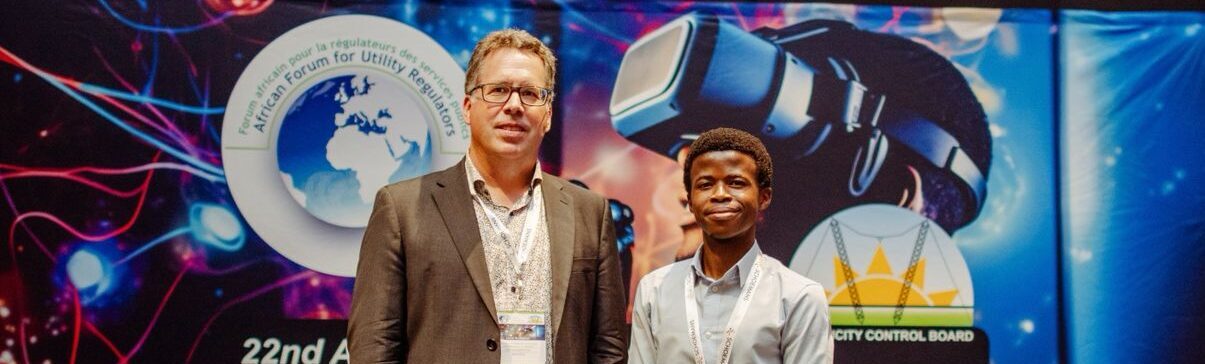
From 23 – 27 March 2026, stakeholders from across Africa convened at the 22nd AFUR Annual Conference organised by the African Forum for Utility Regulators under the theme “Innovative Technologies for Inclusive and Resilient Utility Regulation” in Swakopmund, Namibia. The event brought together senior policymakers, regulators, technical experts, and development partners to examine how emerging technologies can strengthen regulatory systems.
Discussions focused on the transformative role of artificial intelligence (AI), the Internet of Things (IoT), digital transformation, big data, cybersecurity, and geospatial technologies in improving service delivery across the energy, water and sanitation, transport, and maritime sectors. Participants emphasised that leveraging these tools is critical to building resilient and efficient systems across the continent.
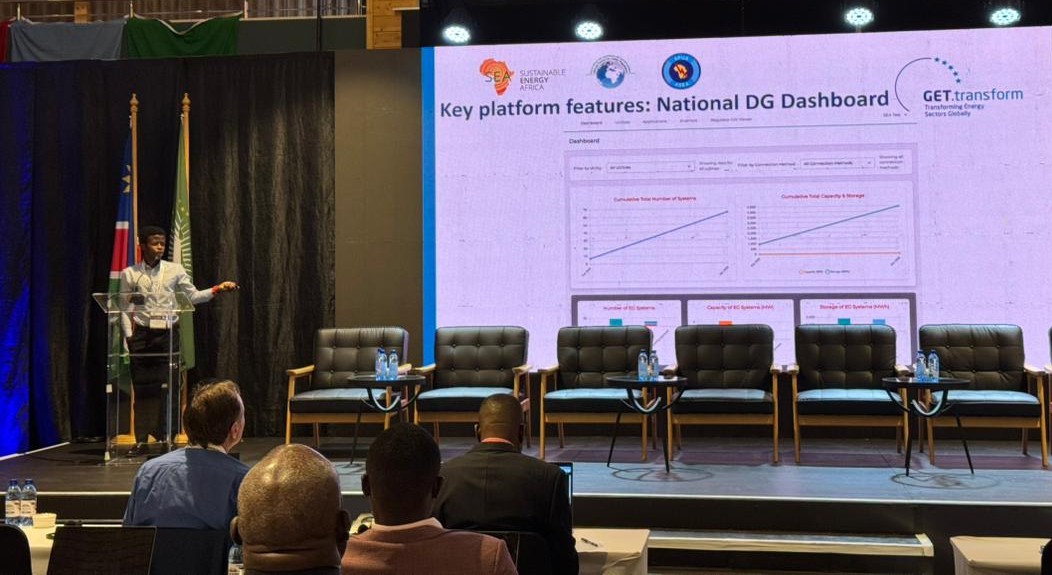
Zibusiso Ndlovu, Advisor at Sustainable Energy Africa (SEA), presented on the experiences of several African countries implementing the Distributed Generation (DG) Online Application Platform to streamline approvals for small-scale renewable energy projects. The tool has been developed in partnership with GET.transform and SEA in context of the Policy Catalyst DG Window.
The platform is designed to streamline approvals for small-scale renewable energy projects by improving administrative efficiency, reducing delays, and supporting the integration of distributed generation into the national grid. It also features GIS-based visualisation of ongoing projects, enhancing transparency as well as planning and decision-making.
In Namibia, progress in this area was demonstrated by the Electricity Control Board (ECB) through a pilot of the DG online application platform in March 2026. This initiative represents a significant step toward modernising energy regulation in the country. More than 50 utility staff from key institutions, including Regional Electricity Distributors namely CENORED, NORED and ErongoRed, the ECB, the City of Windhoek (CoW), and NamPower, participated in a capacity-building training series. This hands-on approach helped ensure that utilities are well equipped to effectively manage and evaluate the growing number of small-scale renewable energy installations.
By simplifying procedures for private developers, the DG platform, which will be hosted by the ECB, is expected to support Namibia’s electrification and energy access goals while accelerating the adoption of decentralized renewable energy solutions. Conference participants noted that such innovations are essential for enabling sustainable development and ensuring that no communities are left behind in Africa’s energy transition.