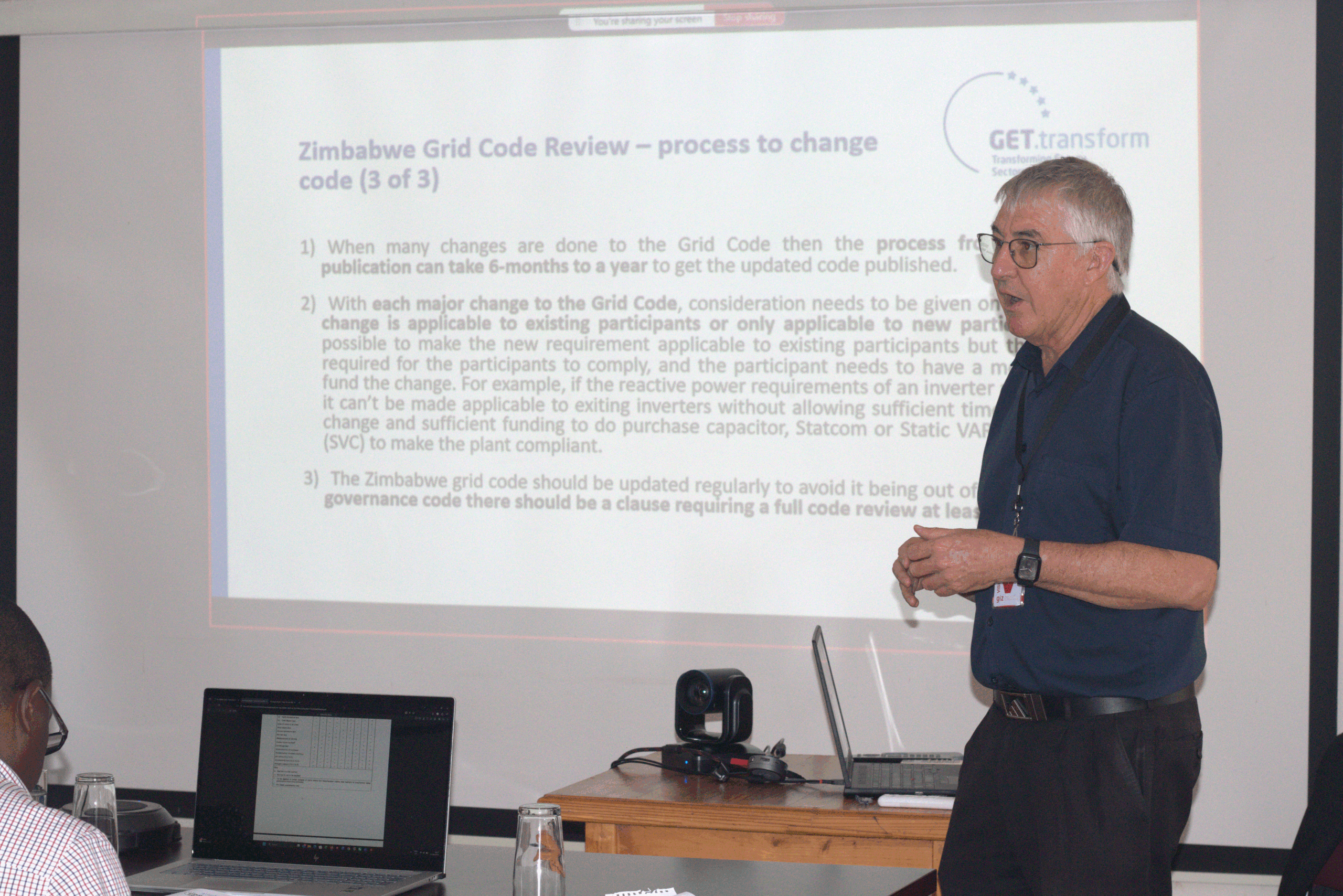

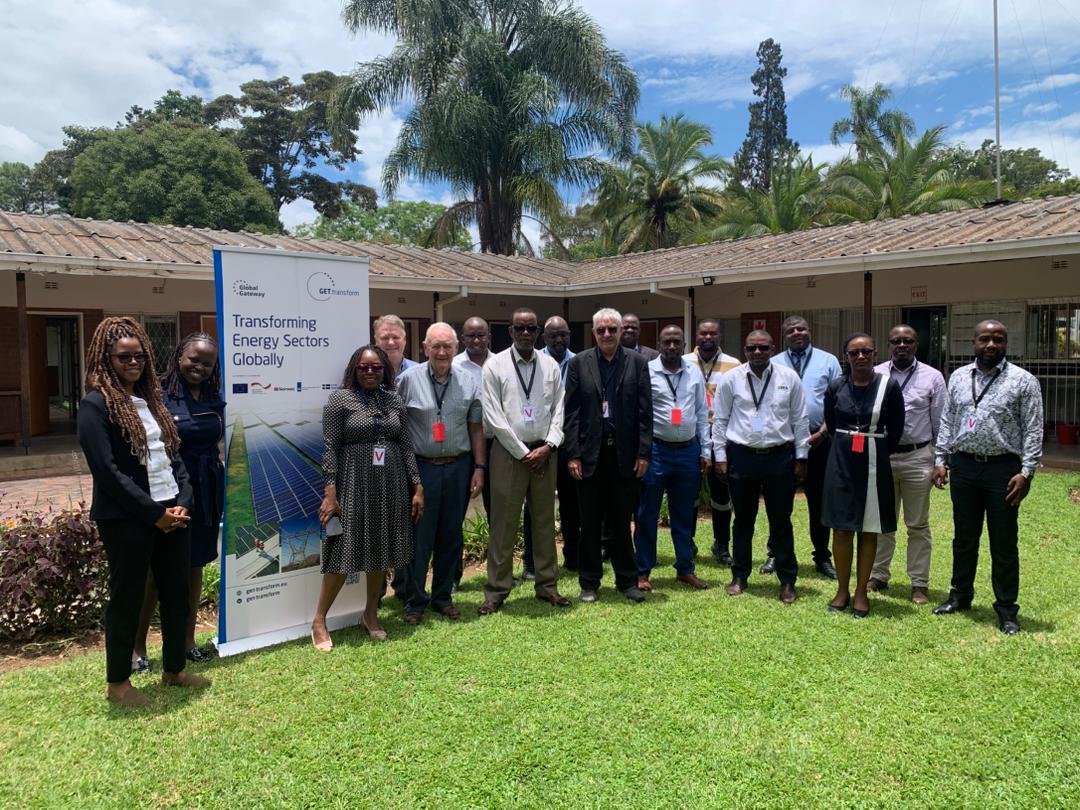
As Zimbabwe moves towards a more diversified and renewable-based power system, ensuring the reliability and security of the national grid is paramount. To support this transition, key institutions from Zimbabwe’s electricity sector convened in partnership with GET.transform to collectively reflect on the future readiness of the country’s grid during a Grid Code Review and Benchmarking Workshop held from 9 – 10 February 2026.
The two-day workshop brought together Zimbabwe’s members of Grid Code Review Panel and stakeholders from the power sector, namely the Ministry of Energy and Power Development (MoEPD), Zimbabwe Electricity Transmission and Distribution Company (ZETDC), Zimbabwe Power Company (ZPC), Zimbabwe Energy Regulatory Authority (ZERA), Independent Power Producer representatives (IPPs), the Intensive Energy User Group (IEUG) and the Standards Association of Zimbabwe (SAZ).
The primary objectives were to build capacity on how Zimbabwe’s Grid Code and market structures can be enhanced to support the increasing integration of renewable energy, and to identify priority reform and coordination activities.
GET.transform, with the support of Energynautics, conducted an in-depth analysis and benchmarking exercise of the existing Grid Code against regional peers, such as Namibia and Lesotho, as well as international practices from the European Union and the United States. The assessment covered multiple dimensions, including technical standards, market design, renewable energy integration requirements, and cybersecurity considerations.
Participants discussed emerging developments within the Zimbabwean power sector, such as the issuing of distribution licences. Key issues explored included grid code governance, the interaction between the system operator and market operator, and the role of regulation in managing distributed generation.
The discussions underscored the importance of regulating all generation technologies consistently across voltage levels and capacity thresholds to protect system integrity. The participants also reflected on the implications of distribution level developments, such as distributed generation and net metering on load forecasting and system balancing.
Moving forward, GET.transform will support the Grid Code Review Panel with reform actions. The drafting of an updated grid code will commence shortly, which will then be shared with all stakeholders for consultation and commentary.