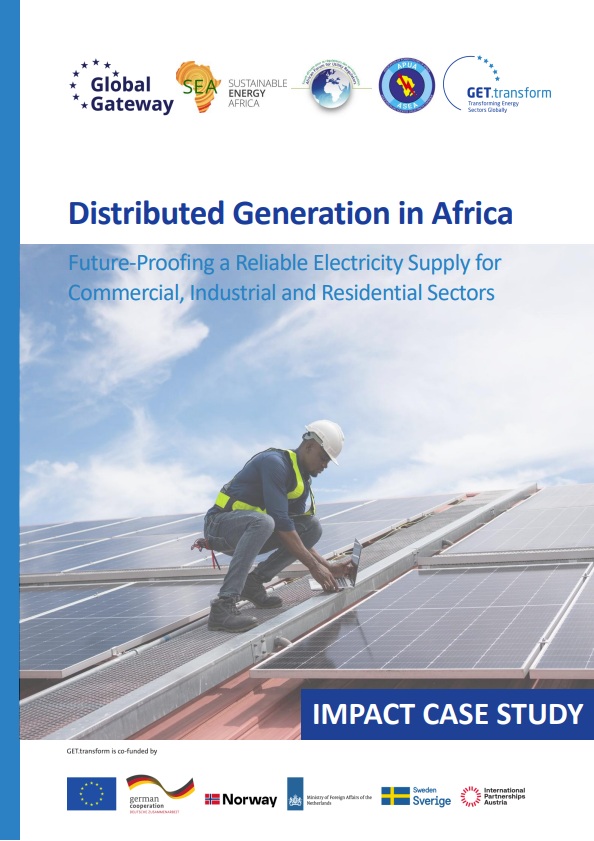

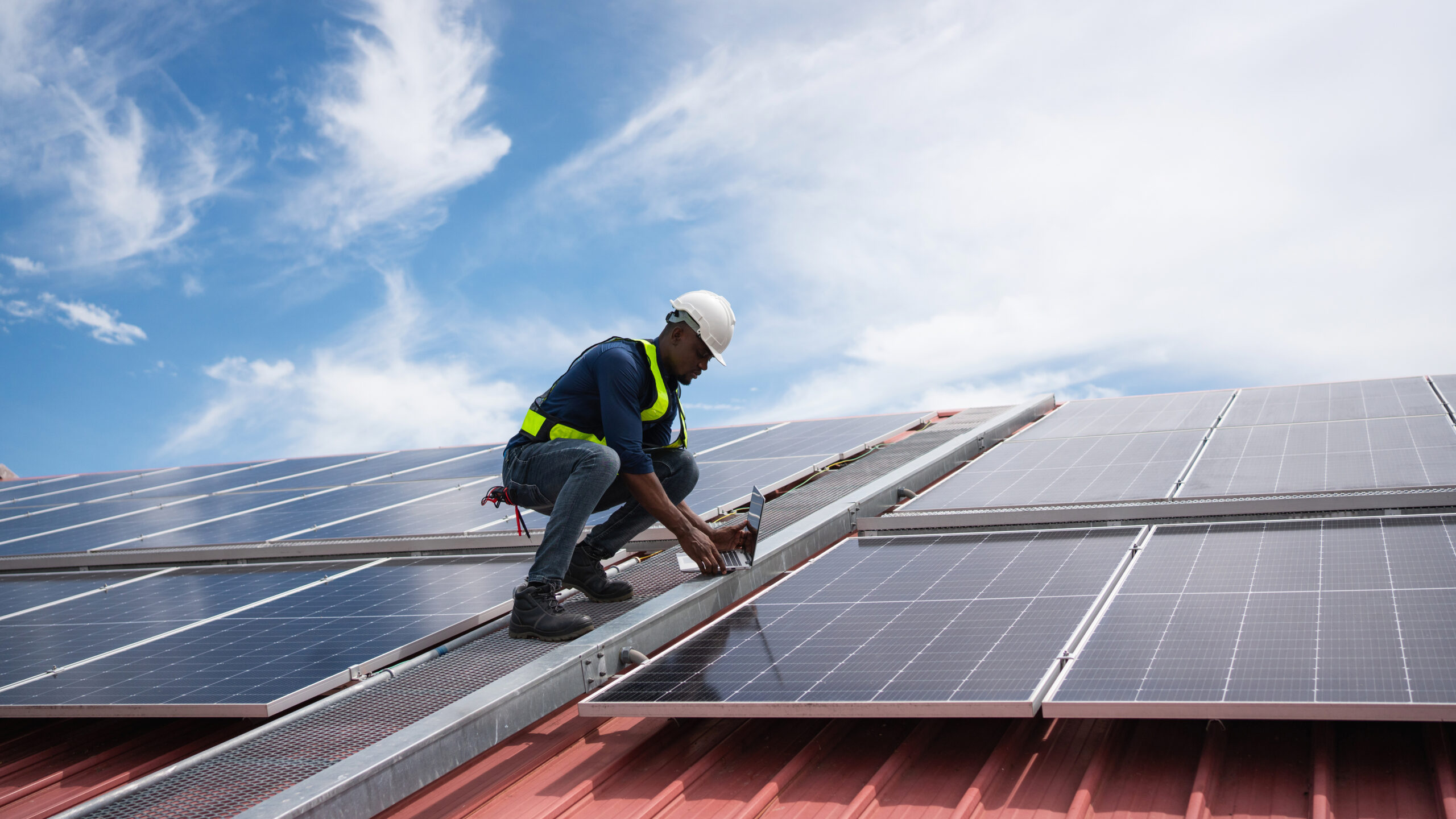
Across Africa, businesses and communities are increasingly turning to distributed solar power to overcome chronic energy shortages, a trend that is reshaping the continent’s industrial and economic landscape. In response, the Policy Catalyst DG Window by GET.transform and Sustainable Energy Africa (SEA) in partnership with the African Forum of Utility Regulators (AFUR), and the Association of Power Utilities of Africa (APUA), has helped to advance frameworks for distributed generation (DG). The initiative supports countries in integrating these new energy sources safely and efficiently into national grids.
In this most recent Impact Case Study, GET.transform showcases how the DG Policy Catalyst Window worked with countries to align regulations, technical standards, and utility processes to keep pace with rapidly growing demand for self-generation. Through a series of collaborative workshops, advisory support, and hands-on practices, relevant institutions are reinforcing their capacity to permit, monitor, and manage DG installations.
The first cohort, comprising Eswatini, Lesotho, Madagascar, Mozambique, Namibia, and Uganda, has already demonstrated substantial progress in establishing or refining regulatory frameworks and technical specifications, as well as addressing buildups of DG applications. Several countries have now developed new DG frameworks, while others have built on existing ones to improve clarity around connection procedures, metering arrangements, and tariff principles. In particular, Madagascar’s early implementation has translated into practical results, leading to the processing of an initial buildups of DG applications totaling 1.5MW. Leveraging this experience, Madagascar is working to address roughly 10MW of pending applications and open up for new requests, while similar exercises are planned in other cohort countries.
By combining peer learning, capacity building and hands-on implementation, the DG Policy Catalyst Window is helping countries respond to accelerating demand for self-generation while safeguarding grid stability and utility revenues. Acknowledging these impacts, GET.transform and its partners have launched a second DG window with Liberia, Senegal, Kenya and Zimbabwe which is well underway.
As distributed generation continues to expand across the continent, these reforms are expected to support a more reliable power supply, invigorate economic activity and contribute to a more sustainable and resilient energy future for Africa.
Find out more: DG Impact Case Study