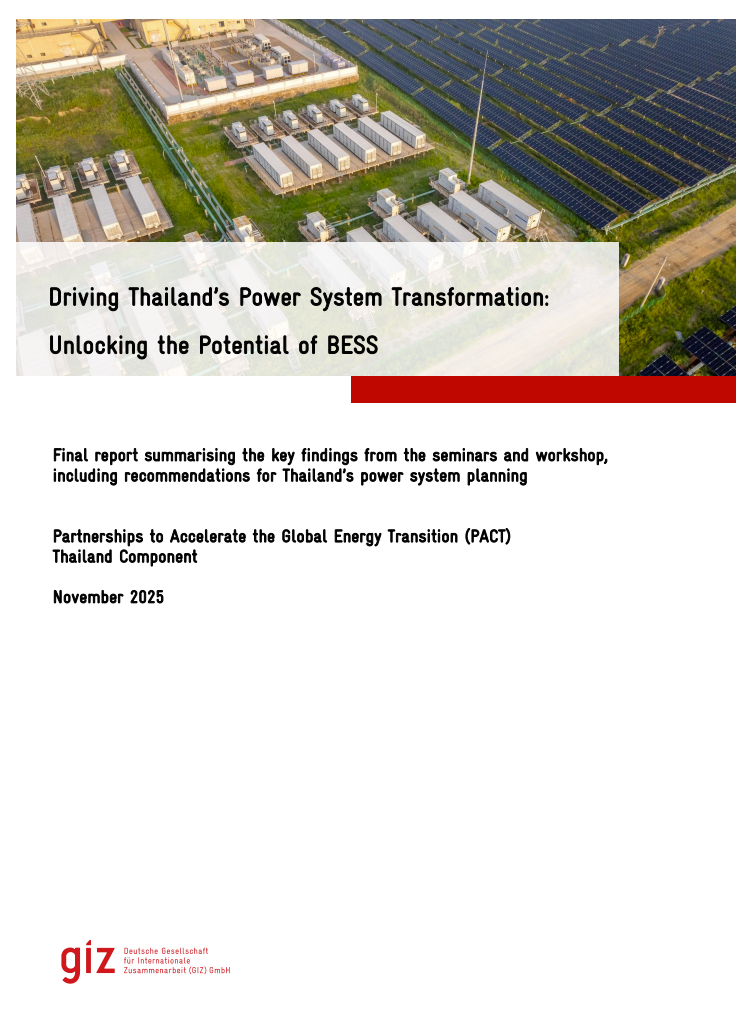

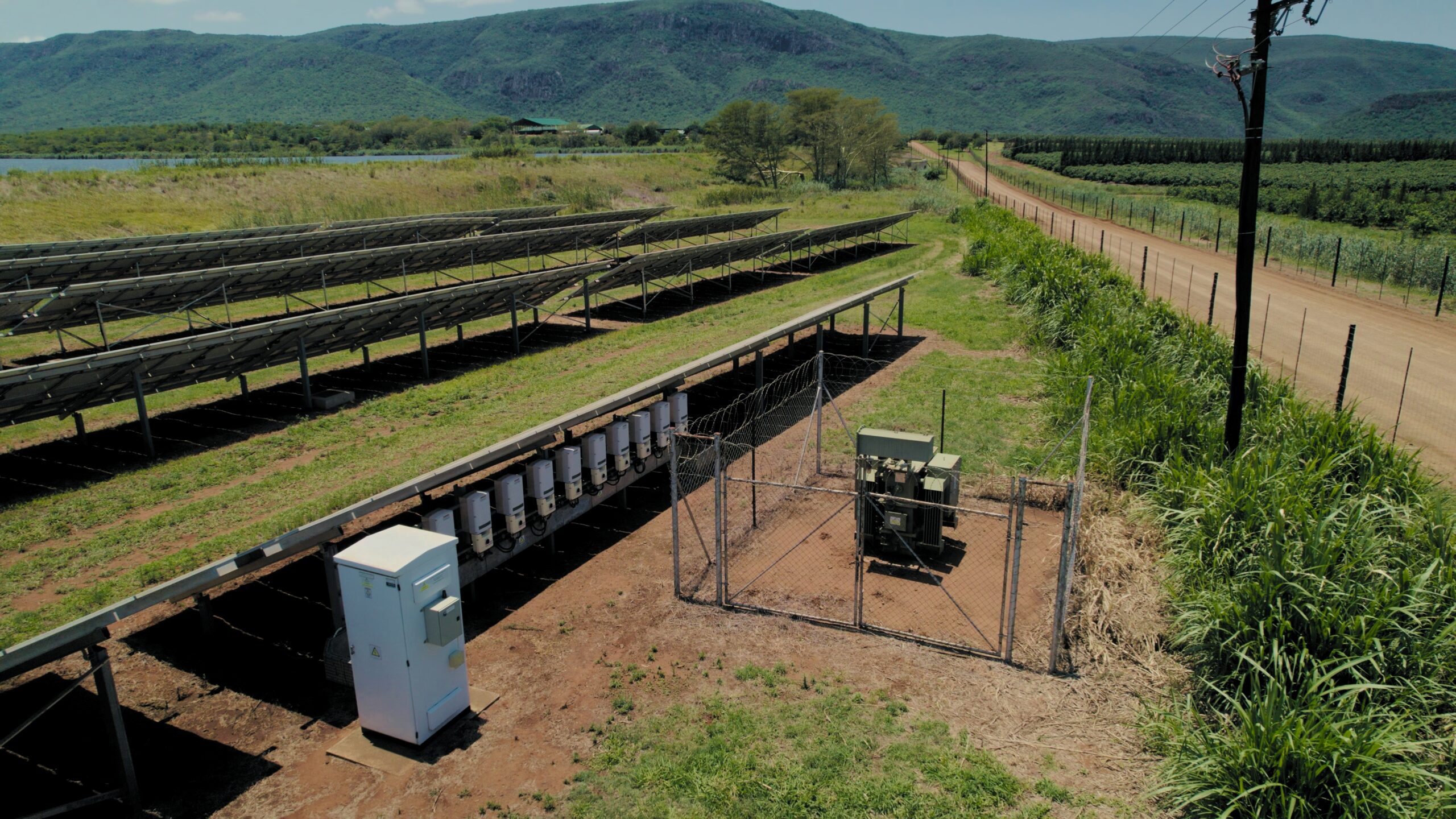
Thailand’s electricity sector is entering a pivotal phase as it pursues ambitious clean energy goals and the draft Power Development Plan (PDP2024). To successfully integrate growing shares of variable renewable energy (VRE), the deployment of reliable and flexible Battery Energy Storage Systems (BESS) is essential.
This comprehensive report offers an assessment of BESS technologies, costs, and applications, alongside tailored recommendations for Thailand’s power system transformation. Drawing on global experience and stakeholder workshops supported by the Partnerships to Accelerate the Global Energy Transition (PACT) project and GET.transform’s Leveraged Partnerships, it clearly demonstrates the critical role BESS plays.
Battery storage is no longer peripheral: it’s a key enabler of a secure, affordable, and clean energy grid worldwide. In Thailand, BESS can maintain system stability, control frequency and voltage, manage grid congestion, and provide evening peak capacity. The report reviews two central deployment pathways: centrally dispatched, network-sited BESS (owned by the system operator) and hybrid PV+BESS systems co-located with renewable generation.
Economic analysis shows that solar PV + BESS can reduce operating costs and lower tariff sensitivity to fuel price volatility. The report outlines a phased roadmap, aligned with the PDP2024, to progressively build technical capacity and scale investments. This strategic approach will support key stakeholders in Thailand to make decisions to reducing fuel dependency and maintaining grid reliability while unlocking opportunities to become a major driver in the region’s clean energy transition.
The full report is available for download.