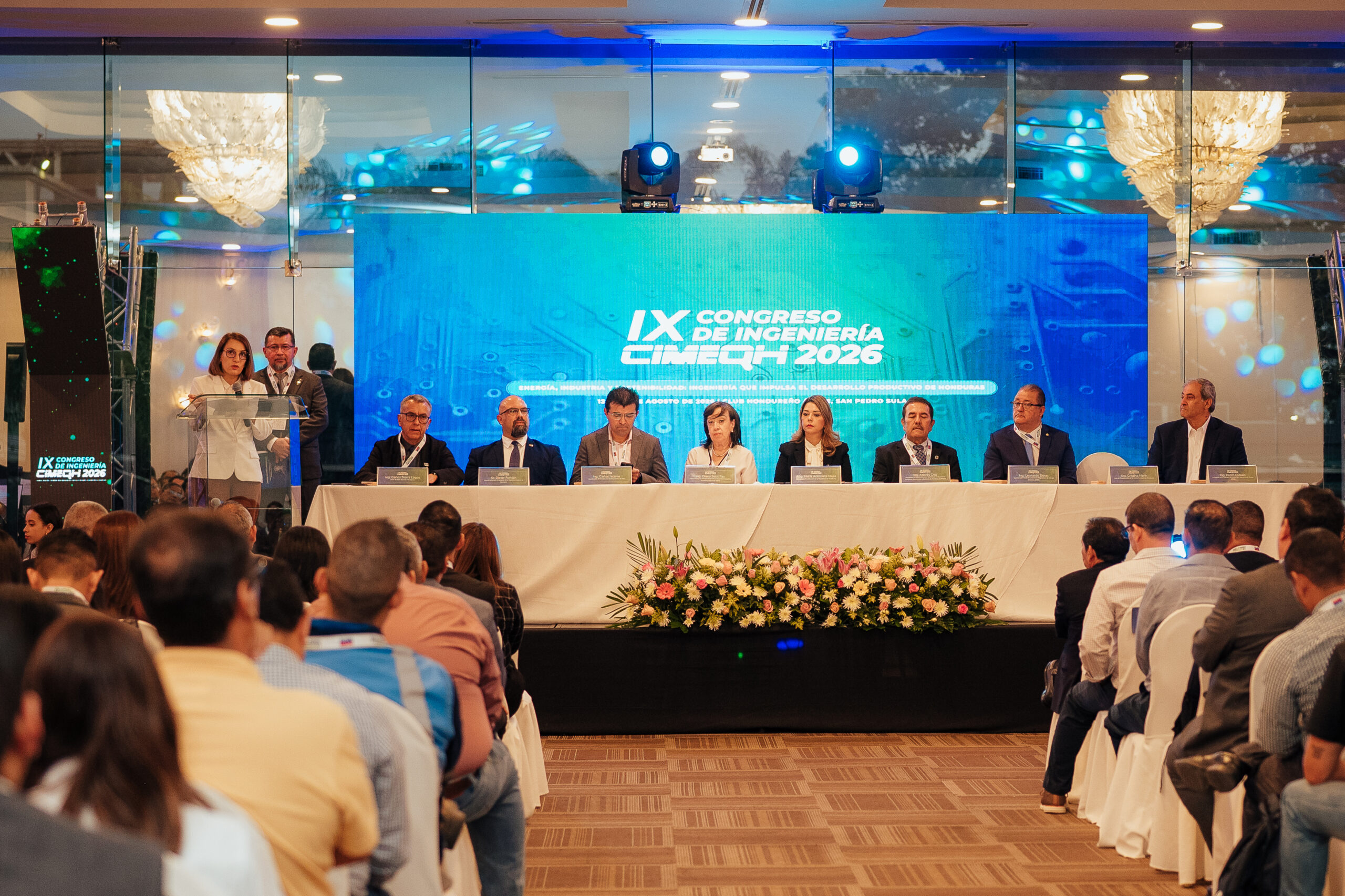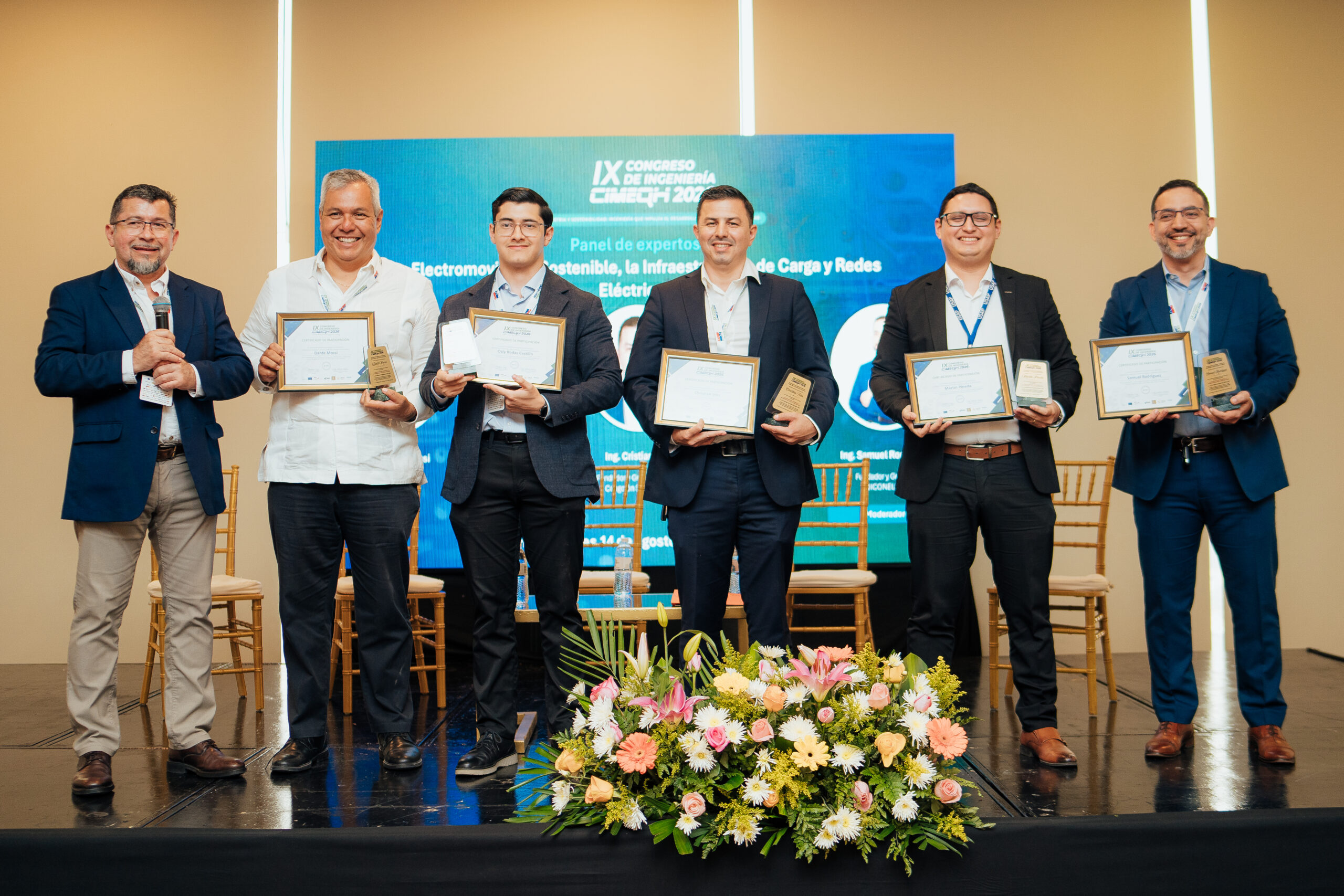


In August, the College of Mechanical, Electrical, and Chemical Engineers of Honduras (CIMEQH), hosted the 9th Engineering Congress in San Pedro Sula, convening engineering professionals, companies, academia, the public sector, and international cooperation organisations to foster innovative solutions in energy, industry and sustainability.
The three-day congress saw a high level of participation, with more than 600 people joining from government institutions, the private sector, regulatory bodies as well as financing institutions. As an annual initiative of CIMEQH, the event promotes technical exchange, networking, and collaboration to strengthen coordination among the different stakeholders in the country’s energy sector.
As a programme co-funded by the European Union, GET.transform co–organised the event in partnership with the Inter-American Development Bank (IDB), Secretariat of Energy (SEN), Electricity Regulatory Commission (CREE), and the Honduras Section of the Institute of Electrical and Electronics Engineers (IEEE).
Osly Roberto Rodas, Senior Advisor for GET.transform’s Central America Window, facilitated strategic stakeholder exchanges. During the opening ceremony, Cristina Marín, Head of Cooperation of the European Union in Honduras, represented the European Union alongside national authorities.
Panel discussions focused on the main challenges and opportunities for Honduras’ sustainable development, including energy efficiency, modernisation of industrial processes, and technological solutions to improve productivity and advance the energy transition. Emerging Industry 4.0 technologies, energy sector regulation, international cooperation and financing for energy and infrastructure projects were equally addressed. The technical and commercial exhibition connected the discussions held during the conferences with technological solutions available in the market.
Topics covered at the Congress are closely related to GET.transform’s work in Central America and Honduras regarding energy planning and modernisation of the power sector.