
Fourteen countries are embarking on a journey of joint learning and technical deep dives with the goal of enhancing their renewable energy tendering capacities.
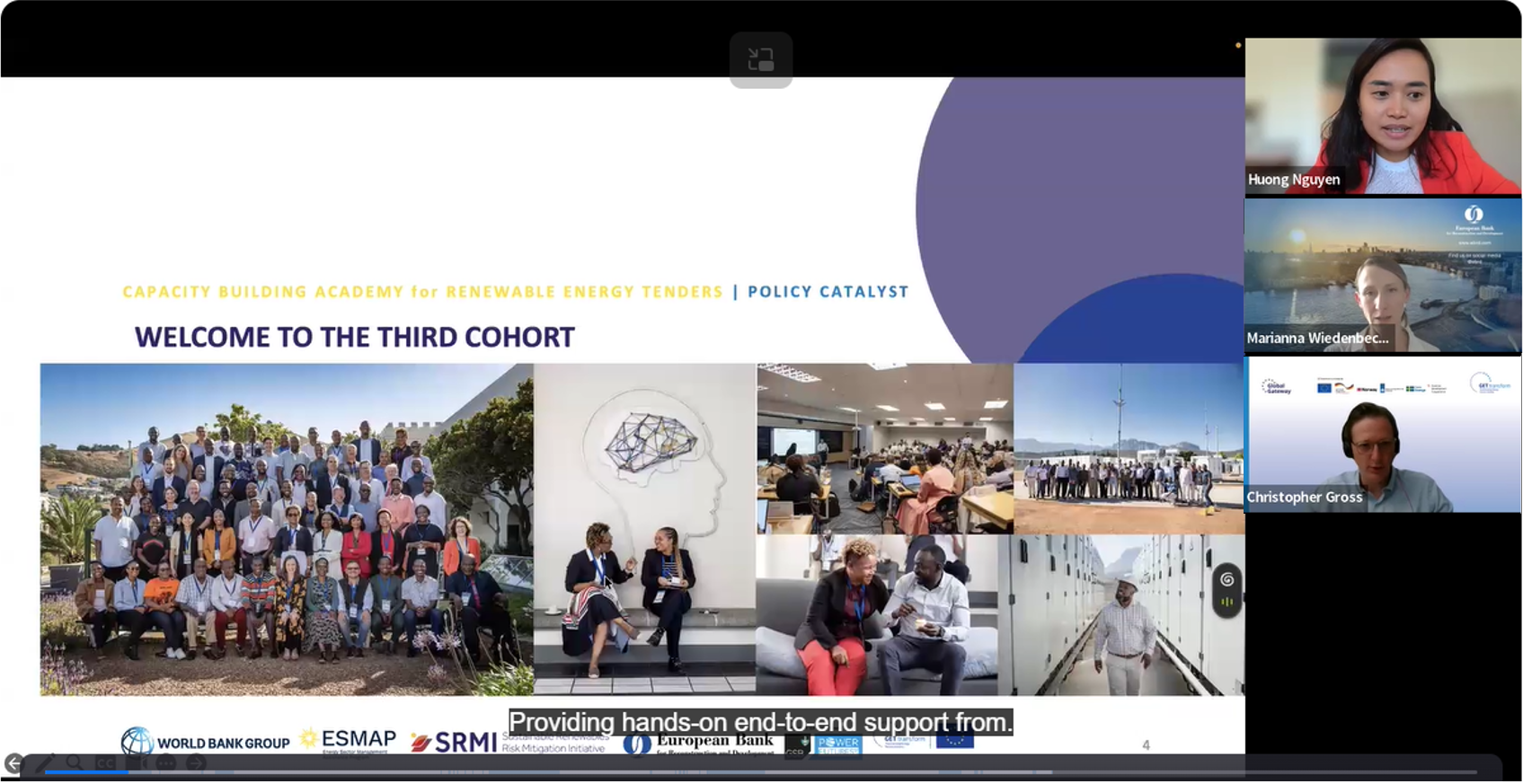
The World Bank Group‘s ESMAP Sustainable Renewables Risk Mitigation Initiative (SRMI), the European Bank for Reconstruction and Development (EBRD), the Power Futures Lab (PFL) and GET.transform have jointly launched the third Capacity Building Academy for Renewable Energy Tenders, a nine-month programme designed to strengthen the capacity of energy-sector leaders to develop and implement competitive renewable energy tenders and mobilise private investment.
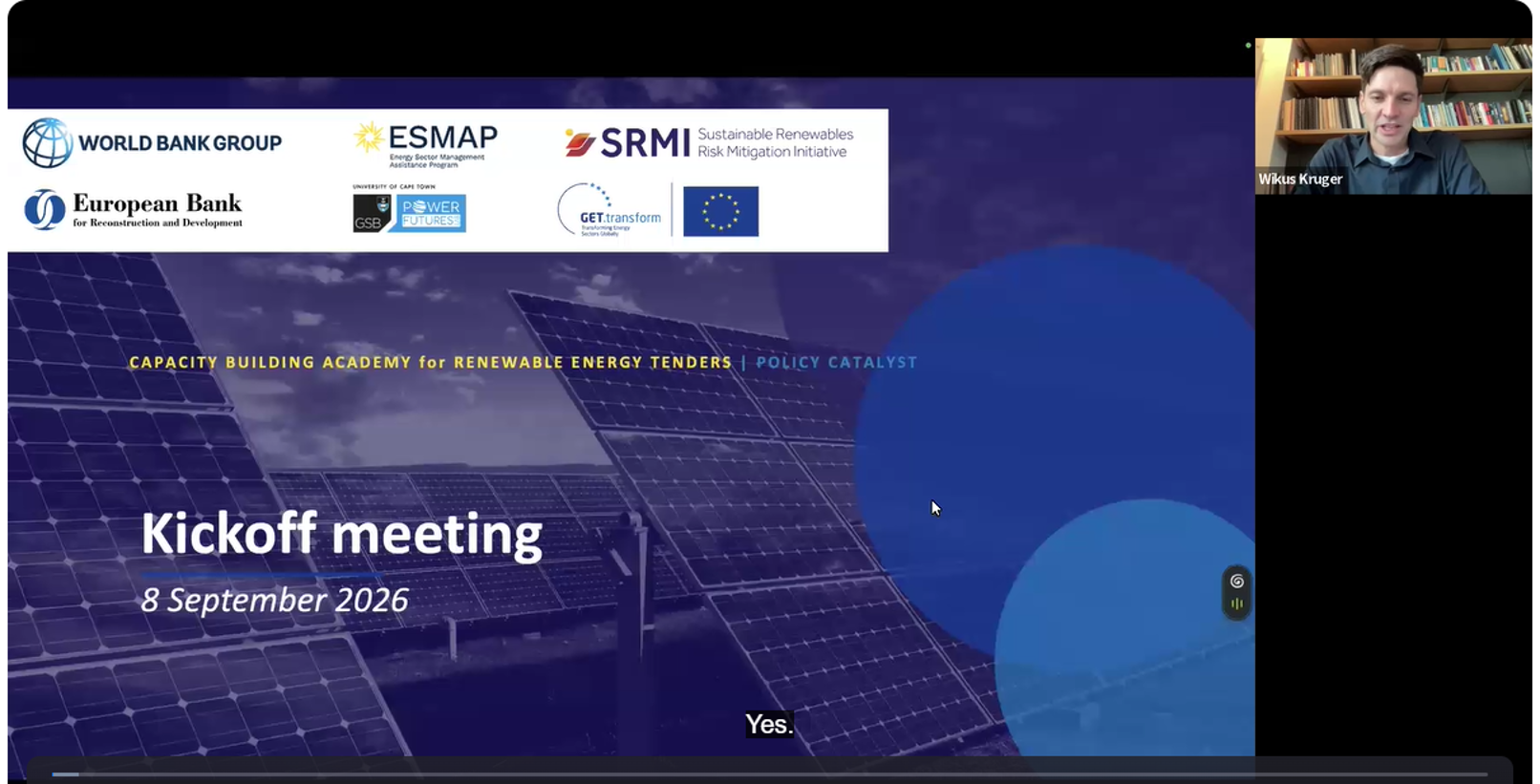
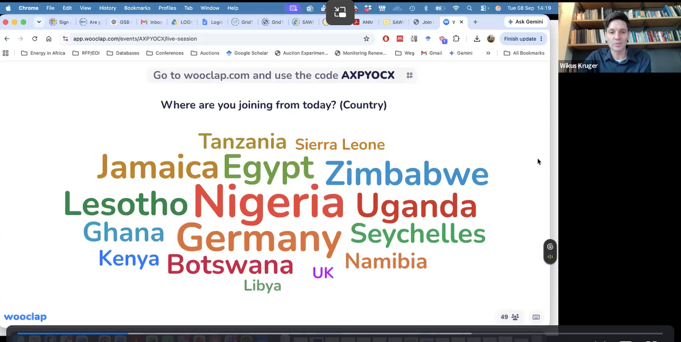
The third Academy brings together representatives from 14 African and Caribbean countries — Botswana, Egypt, Ghana, Jamaica, Kenya, Lesotho, Libya, Namibia, Nigeria, Seychelles, Sierra Leone, Tanzania, Uganda and Zimbabwe — for a programme combining technical training, peer exchange and tailored country-level work. The joint journey officially kicked off on September 8, 2026.
“Mobilizing private capital at scale starts with bankable renewable energy pipelines – the key to expanding energy access. The World Bank Group’s ESMAP SRMI Academies turn that ambition into action – equipping countries to run well-structured competitive tenders that drive down costs, ease fiscal constraints and unlock affordable energy for their citizens. Our ESMAP donors and partners make this possible.”, says Huong M. Nguyen, Senior Energy Specialist, ESMAP, World Bank Group
Running from September 2026 to June 2027, the Academy will provide participants with practical tools and knowledge on the full renewable energy tender process, from energy planning and procurement strategy to project finance, contract and risk allocation, and tender design and implementation.
Marianna Wiedenbeck, Principal, Sustainable Energy Markets at the EBRD, highlights, “The Academy focuses on the people who design, champion and implement tangible reforms and projects in their countries. By strengthening the capacity of these public sector leaders and their institutions, we hope to support the systemic change needed to build sustainable, competitive and resilient clean energy markets.”
Building on two successful cohorts
The Capacity Building Academy for Renewable Energy Tenders builds on two impactful earlier rounds. The programme was launched in September 2024, drawing on extensive research and practical experience demonstrating the role that well-designed competitive auctions can play in accelerating renewable energy investment.
The first Academy, concluding in June 2025, had brought together 65 public-sector representatives from 12 anglophone African countries: Botswana, Eswatini, Ethiopia, The Gambia, Kenya, Lesotho, Liberia, Malawi, Mozambique, Namibia, Uganda and Zimbabwe.
Participants represented public-private partnership directorates, ministries of energy and finance, regulators and utilities. The programme combined two intensive in-person training weeks with seven online modules, covering competitive tender design and the financial risk mitigation of independent power producer (IPP) projects.
A key outcome was the development of country action plans addressing challenges in upcoming renewable energy tenders, with a focus on improving bankability, transparency and effectiveness. The Academy also helped identify approximately 100 technical assistance needs, providing development partners with a basis for better prioritising and coordinating follow-up support.
Wikus Kruger, Director at the Power Futures Lab of the UCT Graduate School of Business, explains, “Our research at the Power Futures Lab has shown, time and again, that well-designed competitive tenders bring down prices for renewable energy and grow the investment pipeline in countries that desperately need it. But that evidence only translates into megawatts if institutions have the capacity to act on it. This Academy builds that capacity directly with the people who design and implement these renewable energy tenders.”
The second Academy, held from October 2025 to June 2026, expanded the initiative to 17 francophone countries, with 72 participants supported with additional backing from the African Development Bank’s Desert to Power programme. Implemented by the Moroccan Agency for Sustainable Energy (MASEN), the second cohort built on the methodology, materials and lessons learned from the first Academy.
Together, the two cohorts became a growing community of practitioners and champions working to strengthen renewable energy procurement and create more effective pathways for private investment.
From knowledge to implementation
The third Academy retains the proven blended-learning approach of its predecessors while placing even greater emphasis on applied learning and country-level implementation.
Following the online kick-off, a first in-person training will further establish the peer-learning community across country delegations. Taking place in Cape Town from 25 to 30 October 2026, the training will provide an intensive introduction to the core technical content, including:
- energy system planning and grid integration of variable renewable energy;
- project finance fundamentals, including bankability, equity and debt structuring, and risk allocation;
- power purchase agreement (PPA) design, including take-or-pay provisions, interconnection and the role of government;
- risk mitigation and credit-enhancement instruments, including political risk insurance, partial risk guarantees and letters of credit; and
- tender design principles, frameworks and key design decisions.
Monthly online sessions will then provide deeper technical dives and opportunities for participants to apply the concepts to their own country contexts. The Academy will culminate in a second in-person training week in Cape Town in early June 2027. This session will focus on putting knowledge into practice through immersive exercises covering the full tender process, including PPA negotiations.
As Stephanie Betz, Policy Advisor at GET.transform, emphasises, “This is not your traditional classroom capacity-building programme. It is a practical laboratory where countries can work on improving their own renewable energy tenders in real time, learning not only from experts, but also from peers facing similar challenges in other countries.”
Supporting a new generation of renewable energy tenders
By combining structured capacity building with applied country-level work, the third Academy aims to help participating countries move from merely acquiring knowledge to taking action and making informed decisions.
At the same time, the Academy provides a platform for country institutions and development partners to identify areas where further technical assistance can help translate capacity into implementation.
The blended approach aims to ensure momentum beyond the nine-month programme and contribute to more transparent and bankable renewable energy tenders. And the participating countries expand their capacities in competitive procurement to accelerate the deployment of clean energy.